9 best Woodpecker alternatives in 2026 (real tests)
Romàn
3 questions
Which Woodpecker alternative fits you?
No email required.
Question 1 / 3
What's slowing you down right now?
Question 2 / 3
Where do your leads come from today?
Question 3 / 3
How much time can you give it each week?
🎯
Your match
Gojiberry
Your answers point at the list rather than the sender. Gojiberry picks the accounts showing interest, drafts the outreach and runs it across both channels, so you're skipping the part where somebody builds a spreadsheet.
🏢
Your match
Smartlead
You run several clients, you already own your data and outbound is your day job. That combination wants agency-grade inbox infrastructure, and we don't pretend to sell it.
If the list is the part that hurts, see what we add on top.
💰
Your match
Saleshandy
Price is the problem and you own your data already. Saleshandy is the cheapest sender on this list, and it'll hand you lead credits on top.
If the list is the part that hurts, see what we add on top.
Woodpecker advertises $35 a month for 500 contacted prospects. Turn on social outreach and the integrations add-on and you're at $84 before you've written a single line of copy. That gap is what sends most people looking for something else.
Here are nine replacements: Gojiberry, Saleshandy, Instantly, Smartlead, Lemlist, Snov.io, GMass, Mailshake and Apollo. These nine share one thing: each of them publishes a price you can check yourself, and each shows up on the shortlists teams build when they leave. If you want the wider category, we've got a longer list of email outreach automation tools as well.
Table of contents
What Woodpecker costs you every month
Woodpecker meters contacted prospects rather than seats. The rate reads $7.00 per 100, so a plan sized for 500 new prospects a month lands at $35. Team members and email accounts don't cost extra, and that tier includes 16,000 emails, 4,000 stored prospects, four warm-ups and 100 finder credits.
Two add-ons change the number. Social outreach costs $29 a month for each connected account. The integrations, the API, webhooks, the MCP server and the CLI all sit behind one $20 add-on. Switch both on and you're looking at $84.
500 contacted prospects, at $7.00 per 100
$35
Social outreach, one connected account
$29
Integrations, API, webhooks, MCP and CLI
$20
What you pay each month
$84
Annual billing takes 33% off the subscription itself. Everything else stacks on top: extra warm-ups at $5 a mailbox, Google or Microsoft mailboxes at $6 each, agency client workspaces at $27 apiece plus $5 for white label. We've checked every figure on woodpecker.co on September 7, 2026.
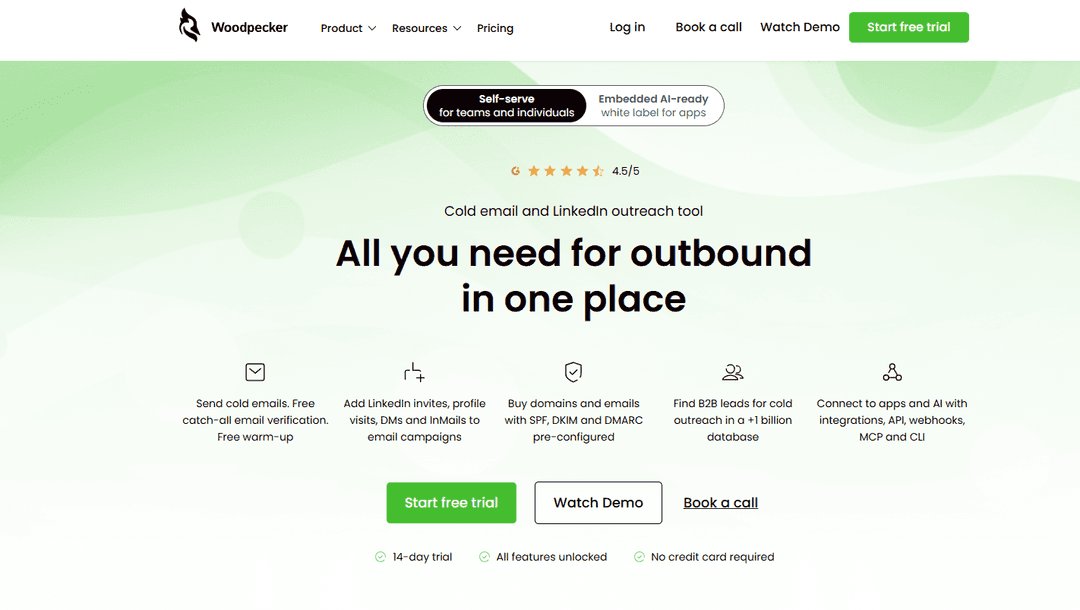
Why teams like yours leave Woodpecker
The builder shows its age. Reviewers on G2 keep circling the same three things: sequence management with no drag and drop, occasional bugs, and the app slowing down once several campaigns run at once. None of it stops a send. It just wears on you, because it lands on the task you repeat most often.
The prospect ceiling bites mid-month. Because the meter counts new people contacted, a busy fortnight can spend the whole allowance. Once you hit the cap, campaigns stop reaching new prospects until the billing date comes round or you move up a tier. Teams with uneven send patterns feel that far more than steady ones do, and they're the ones who start looking.
The add-ons decide the invoice. That $35 headline holds only while you send email and nothing else. Social outreach, integrations, extra warm-ups and bought mailboxes each carry their own line, and they compound quietly. You budget one number and you're billed another.
Support runs on Warsaw hours. Woodpecker works out of Wroclaw, so an afternoon question from the US west coast usually waits until the next morning. G2's own summary of its reviews flags unhappiness with how support handled concerns about the warm-up, which sends unusual-looking messages from your business address with little warning. Over on Trustpilot, a small pile of 31 reviews leans hard toward billing and cancellation.
How we tested these 9 tools
Our method
We opened all nine pricing pages ourselves on September 7, 2026 and wrote down what each one said, including whether the headline number bills monthly or annually. Where a vendor sells its contact data on a separate subscription, we priced that line too. We read public reviews on G2, Capterra and Trustpilot for every product, and we ran the self-serve ones we re already paying for.
One thing you won't find here: a scorecard of measured reply rates across nine tools on one identical list. We haven't run that test, and an invented percentage would be worth less than this sentence admitting it. When we run it, the numbers land on this page. We pay for every plan out of our own pocket, no vendor read a word of this before publication, and Gojiberry is our product, which is why it sits at number one and why we tell you where it loses.
The 9 best Woodpecker alternatives in 2026
The table gives you the shape of each one. The entries below it carry the detail, the screenshots and the prices, with the billing period attached, because a yearly rate isn't a monthly one.
Tool
Leads included
Channels
Entry price and billing
Free plan
Best for
Gojiberry
Yes, from live signals
Email plus socials
$99 a month, per account
Free to start
Small teams with no list
Saleshandy
Yes, credits included
Email and calls
$34 a month, yearly rate
7-day trial
Cheapest sender that also finds data
Instantly
Separate subscription
$47 a month, paid monthly
Trial only
Volume across many inboxes
Smartlead
Add-on module
Email and calling
$39 a month, monthly rate
Free trial
Agencies running client inboxes
Lemlist
Yes, credit-metered
Email, social, calls, SMS
$69 a month, monthly rate
14-day trial
Multichannel with heavy personalization
Snov.io
Yes, credit-metered
Email, social add-on
$39 a month, no commitment
Yes
Building your own lists on a budget
GMass
No
Email inside Gmail
$29.95 a month, paid monthly
7-day trial
Solo senders who live in Gmail
Mailshake
Separate subscription
Email, calls, social
$49 per seat, paid monthly
Free tier
One seat that writes and dials
Apollo
Yes, credits included
Email plus a dialer
$49 per seat, yearly rate
Yes
Database first, sending second
1. Gojiberry
Gojiberry reads your website, works out who you sell to, then watches for the moments that make a company worth contacting. It finds the people, writes the outreach and runs it them across email and socials, so there's no list to build before you start.
- 🔔Signals first: The agent tracks buying and social signals, then writes to the accounts that moved this week rather than whatever's left in a spreadsheet.
- 🎯Scored against your ICP: Every prospect gets a score before anything goes out, and the poor-fit ones don't touch your sending domain.
- 📨Two channels, one plan: Email plus socials run from the same agent, and you don't build a sequence for either.
- 🧠Replies drafted for you: When somebody answers, a written reply waits in your inbox and it's one click to send.
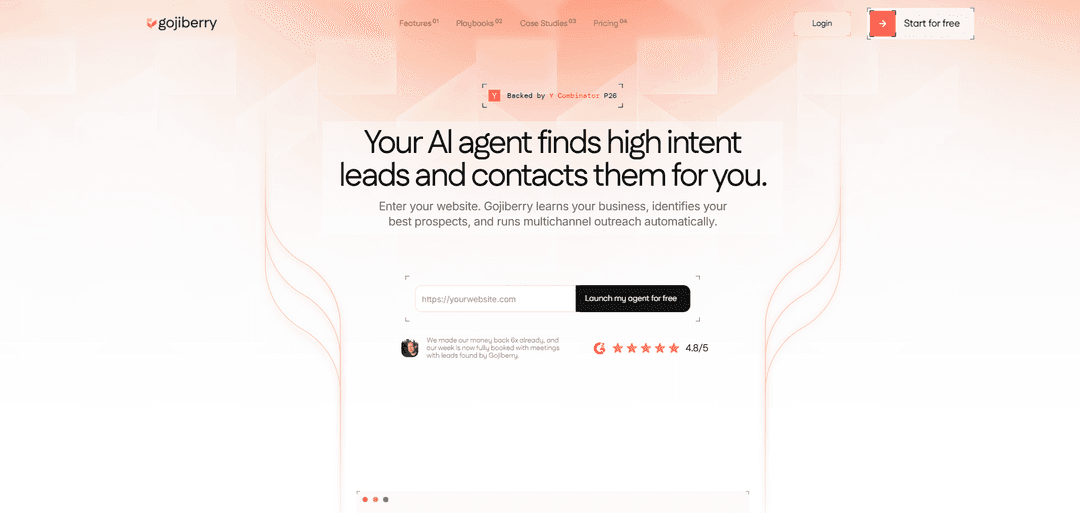
Pro costs $99 a month per account, not per seat, and that's the whole subscription. It covers two agents working around the clock, up to 1,800 prospects contacted a month, and waterfall email enrichment across 15+ data providers. Custom sits above it for teams of five and up. You can start free.
Timing is the reason this works at small scale. The US Bureau of Labor Statistics puts median job tenure at 3.9 years, so a slice of your market changes seats every month, and each of those moves is a reason to write. We break the full set down in our guide to 13 intent signals worth watching.
Volume is where we lose. An agency pushing tens of thousands of emails a month wants Smartlead, and we'll say so again further down. Under that ceiling, nothing else here removes as much work between deciding to sell and somebody replying.
Stop building lists by hand
Gojiberry spots the companies showing interest and sends them your way.
Get my first leads2. Saleshandy
Saleshandy puts the sending platform and the contact data on one invoice, which is rare at this price. Lead credits ship with every plan, so nobody stacks a data subscription on top of a sender.
- 📤Metered on active prospects: Plans count contacts sitting in a sequence plus a monthly email cap, and you're not capped on email accounts at any tier.
- 🔎Data in the box: Starter ships 1,500 finder credits a month, Pro 4,000 and Scale 8,000, and they're back every cycle.
- 🔁Warm-up included: Every tier warms your mailboxes, so there's no second tool and no second bill.
- 🧰Infrastructure on tap: Ready-made domains and mailboxes run $2.99 to $3.99 per mailbox a month if you'd rather skip the DNS work.
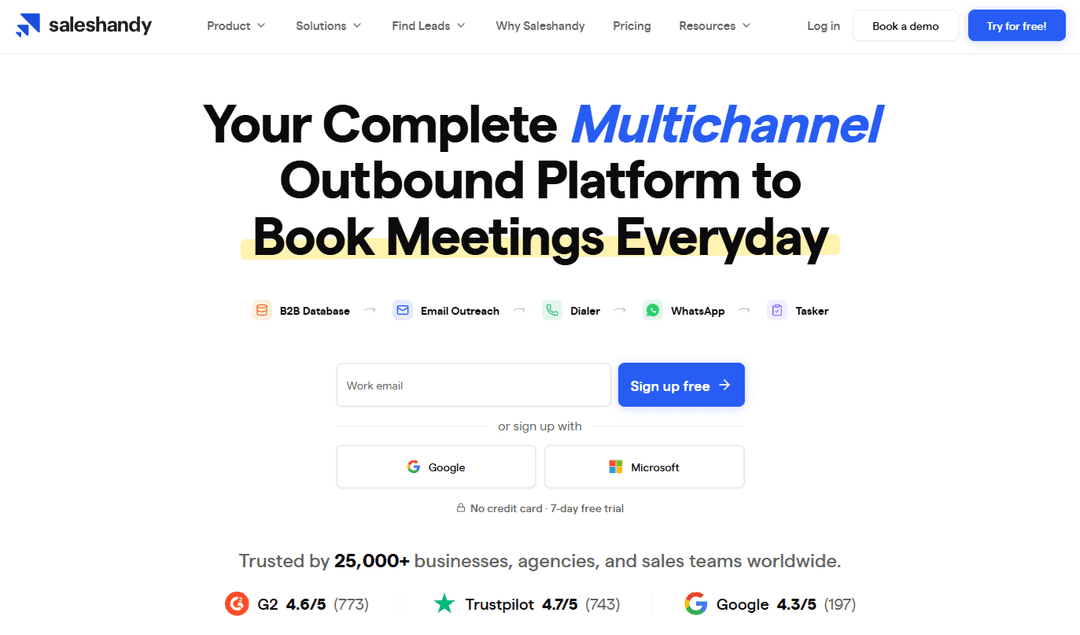
Starter runs $34 a month billed annually, or $41 if you pay month to month. Pro moves to $76 annually and $99 monthly, Scale to $149 and $189. A 7-day trial covers the look around, and there's no permanent free tier.
Nothing here hands you more sending and more data for less money. What it won't do is tell you which of those contacts deserves an email this week.
3. Instantly
Instantly made its name on flat pricing with unlimited mailboxes, and the model still holds. You pay for contacts stored and emails sent, never for the number of sending accounts you plug in.
- 📥Unlimited inboxes: Connect as many sending accounts as your domains support, and you won't pay a per-mailbox fee on any tier.
- 📊Two ceilings do the metering: Growth stops at 1,000 contacts and 5,000 emails a month, and Hypergrowth doesn't blink until 25,000 and 100,000.
- 🔄Warm-up everywhere: The warm-up network runs on all three paid tiers, and it doesn't cost extra on any of them.
- 💬Unibox from the second tier: The unified reply inbox starts at Hypergrowth.
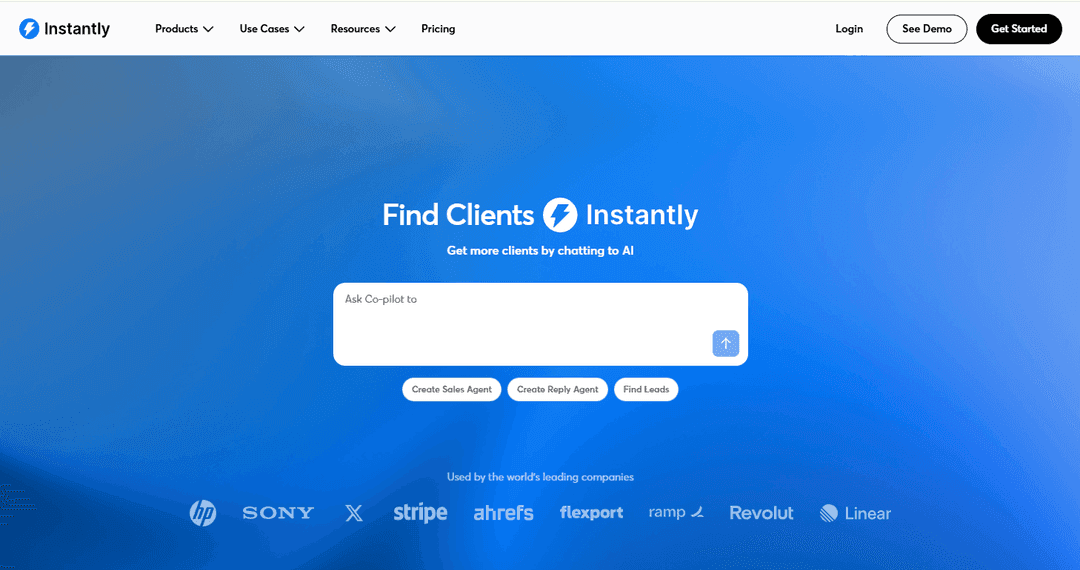
Growth costs $47 a month if you pay monthly, or $37.60 on an annual plan. Hypergrowth is $97 and $77.60, Light Speed $358 and $286.30. The lead database sells as its own subscription, so you're budgeting two lines rather than one.
That 5,000-email cap on Growth is a test tier and it reads like one. Most teams settle on Hypergrowth, and once they're there the question stops being the price and starts being who ended up on the list. We cover the rest of the field in our roundup of Instantly alternatives.
4. Smartlead
Smartlead does the same job as Instantly with a deeper agency layer on top. Client workspaces and white-label portals make it the default when you're sending for other companies.
- 🏢Built for many clients: Separate workspaces keep each client's campaigns, domains and reporting apart from the next.
- 📈Four tiers, one shape: Basic covers 2,000 leads and 6,000 emails, and Pro doesn't stop until 30,000 and 150,000.
- 🔒Mailboxes stay unlimited: Every plan connects as many sending accounts as you like, and warm-up won't cost you more.
- 🔧API and webhooks from Pro: Custom CRM fields, the global block list and webhooks don't show up until one tier higher.
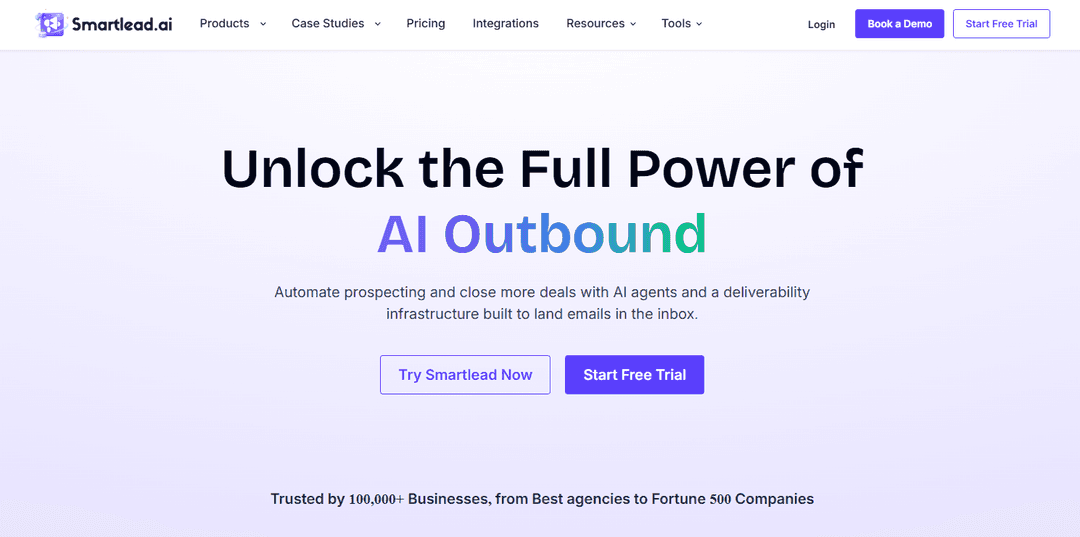
Basic is $39 a month, Pro $94, Unlimited Smart $174 and Unlimited Prime $379, all on the monthly rate. A year up front cuts roughly 17%. There's a free trial and it without a card.
Unlimited covers mailboxes and storage, while sending volume stays tiered. Check both ceilings before you sign, because Basic runs dry sooner than you'd think. We put the two head to head in Smartlead vs Instantly.
5. Lemlist
Lemlist runs email, social steps, calls, SMS and WhatsApp from a single sequence builder, with personalization the others don't attempt. The pricing changed shape in 2026, and the cheaper plan now carries unlimited users.
- 🌐Five channels in one flow: Email, social touches, in-app calling, SMS and a WhatsApp add-on share one sequence, so you're not stitching tools together.
- 🎨Personalization past the merge field: Custom images, liquid syntax and dynamic blocks mean two prospects don't get the same message twice.
- 👥Unlimited seats on Email: The entry plan bills flat and covers 50,000 emails a month, however many people you've got.
- 🧮Credits price the data: A verified email costs 5 credits and a phone number 20, and a credit's worth one cent.
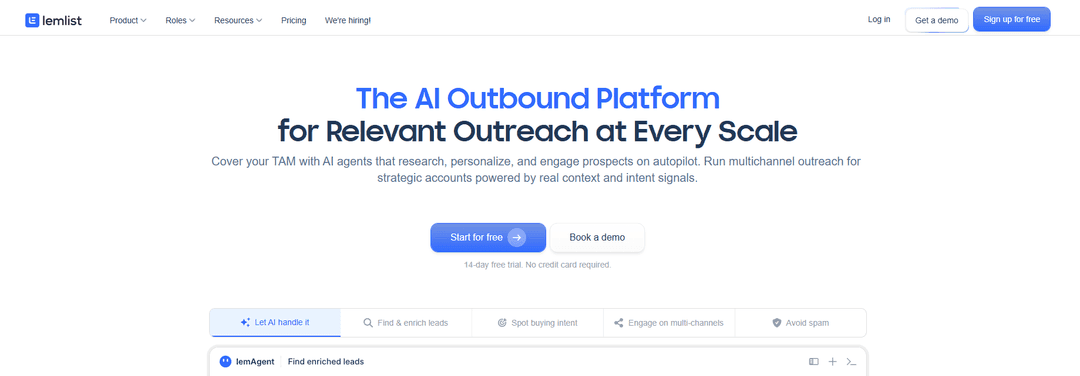
The Email plan costs $69 a month, dropping to $55 on a yearly commitment, with unlimited users and 50,000 emails. Multichannel is $109 a month per user, $87 yearly, and gives five senders per user. Enterprise opens at five seats. The trial lasts 14 days with no card.
Per-user pricing on Multichannel decides this one. Two people on full multichannel pay $218 a month before a single lookup, and the credit meter starts after that. The flat Email plan reads very differently, and for an email-only team it's one of the better deals here.
6. Snov.io
Snov.io bundles finding addresses, checking them and sending to them, with a small CRM attached. Credits do the metering, and they're spent on lookups rather than sends.
- 🔍One credit, one result: A found email, a verified address or a saved prospect each costs one credit, and campaigns don't touch that pool: they draw on a separate recipients quota.
- 📅Credits expire monthly: Whatever you leave unused disappears at the end of the cycle, so a quiet month doesn't carry over.
- 📬Warm-up on paid plans: Mailbox warm-up ships with every paid tier, though Starter won't run more than three slots.
- 🧵Social automation costs extra: The social outreach add-on runs $69 a month per connected account, and it isn't folded into any plan.
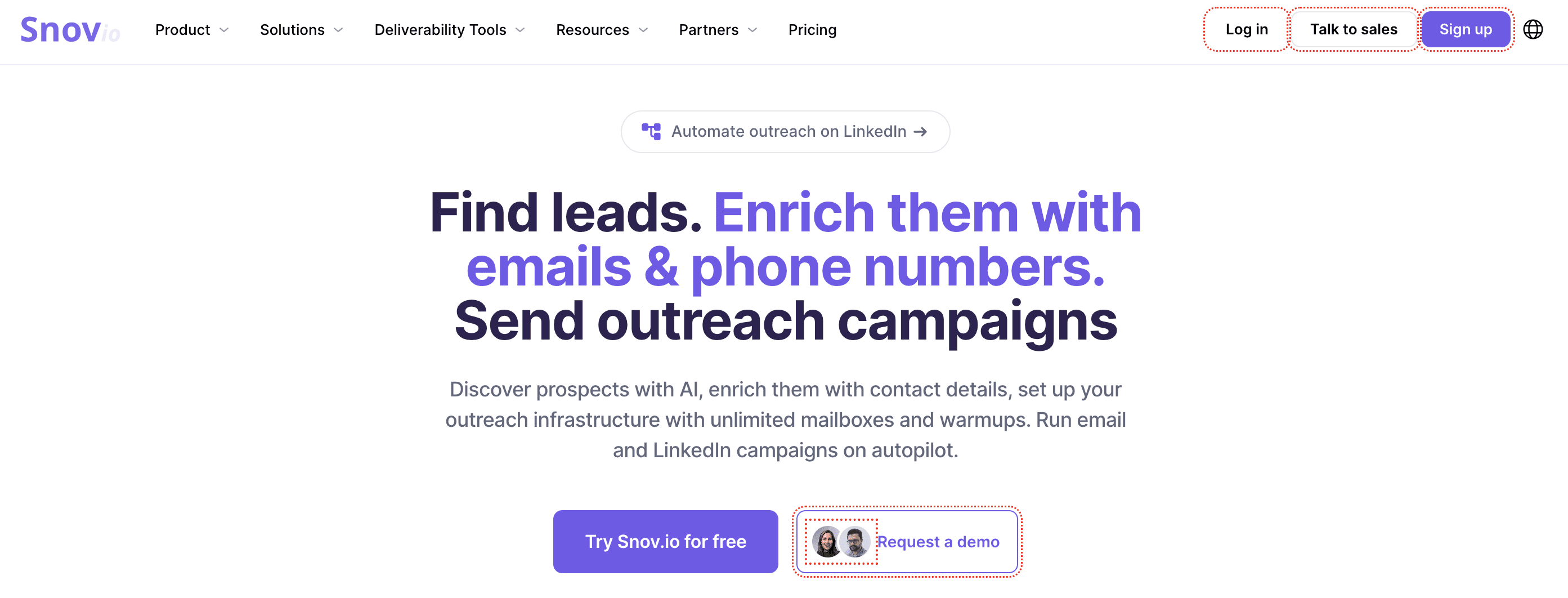
Starter is $39 month to month, around $29 when you commit for a year, for 1,000 credits and 5,000 recipients. The Pro ladder climbs through $99, $189, $369 and $738. A free Trial plan renews 50 credits and 100 recipients, which is enough to judge the data and it won't stretch further.
Cost per credit drops roughly fourfold as you climb that ladder, so undersizing your plan quietly doubles what each lead costs you. Pick one tier above where you think you'll land.
7. GMass
GMass lives inside Gmail as a Chrome extension, and that's the entire pitch. Nothing else in these nine gets you sending in five minutes from the inbox you already use.
- 📧Mail merge from Sheets: Campaigns read straight out of a Google Sheet, and you don't leave the browser to build one.
- 🚀No new interface: Everything happens in the Gmail compose window, so there's nothing for a team to learn.
- 📌Follow-ups start at Premium: Standard handles one-off merges, and automated sequences wait until Premium.
- 🔀Inbox rotation at the top: MultiSend spreads volume across several Gmail accounts, and it's on Professional only.
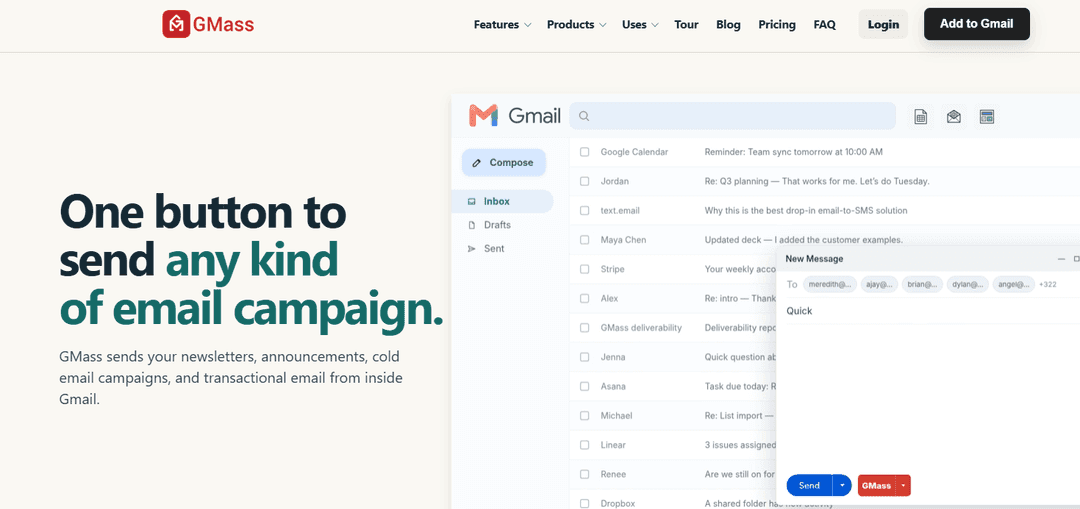
Standard costs $29.95 a month, or $20 on an annual plan. Premium is $39.95 and $29, Professional $59.95 and $49. Team plans open at $175 a month for five users. The 7-day trial caps you at 50 emails a day, and there's no free plan waiting after it.
Cold outreach needs Premium here, because Standard carries no follow-ups and a single first email rarely earns an answer. Gmail's own daily sending limits still apply on top of whatever you pay.
8. Mailshake
Mailshake pairs email sequences with a dialer and social steps on its top tier, all inside one seat. It's the only tool here that puts calling and sending in the same subscription without an add-on.
- 📞Dialer on Sales Engagement: The top tier bundles a power dialer with call recording and local numbers, and no phone vendor sends you a bill.
- 📝Copy help built in: The writing assistant drafts a sequence from a short description of what you sell, and it beats staring at an empty box.
- 🔖Seats decide your mailboxes: Each paid user connects a fixed number of sending addresses: you're capped at two on the middle tier and five on the top.
- 💰Data sold apart: Finding contacts runs on its own subscription, so the seat price isn't the whole bill.
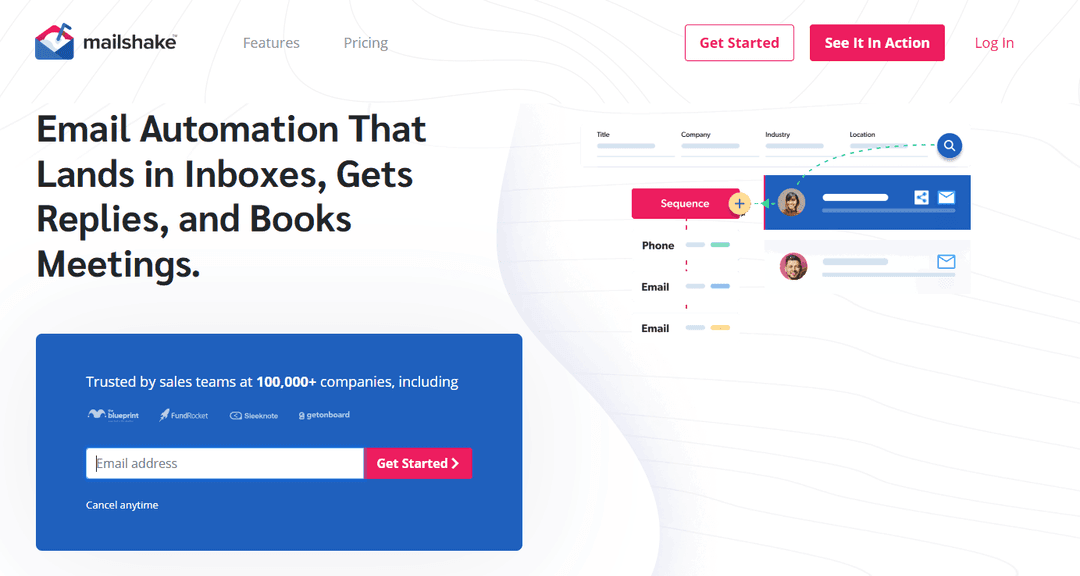
Starter costs nothing and covers one address. Email Outreach is $49 per user a month, or $45 with annual billing, and Sales Engagement $99 and $85. There's no free trial: you pay up front and get 30 days to change your mind. Our full Mailshake review walks the tiers in detail.
The seat is where it gets expensive. The stack is where it gets cheap, because one subscription swallows the phone tool you'd otherwise buy.
9. Apollo
Apollo starts from the database and adds sending on top, the reverse of most of this list. You're buying a contact database of more than 270 million people and getting a sequencer with it.
- 📚Data leads the product: Search, filters and enrichment carry the platform, and the sequencer's along for the ride.
- 🧩Credits granted yearly: Basic ships 60,000 credits a user each year, Professional 120,000 and Organization 180,000.
- 🔥Intent topics by tier: Basic tracks six topics, Organization twelve, and there's no half step between them.
- 🤝Three seats minimum up top: Organization starts at three users, so the real floor is $357 a month.
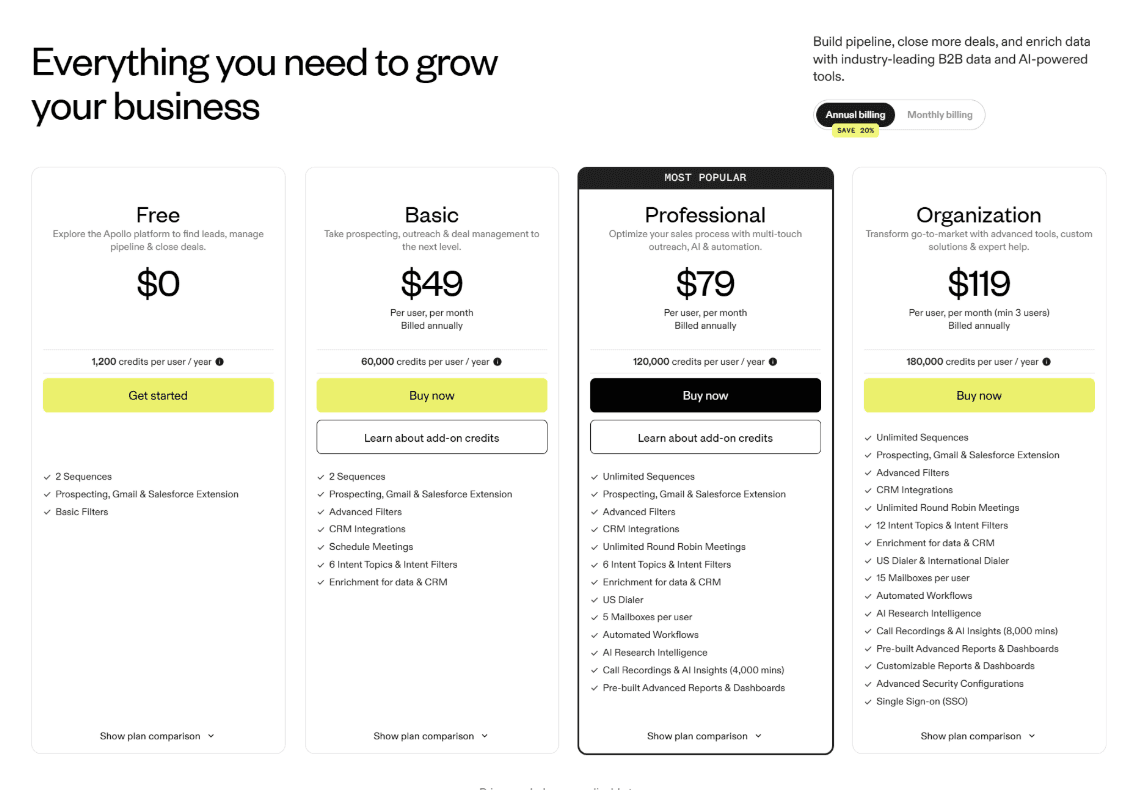
Free covers 1,200 credits a user each year. Basic is $49 per user a month billed annually, Professional $79 and Organization $119. Every tier costs more when you pay monthly, and unused credits vanish at the end of each month. We've pulled the whole model apart in our breakdown of Apollo pricing.
Credits that expire punish a slow week, and teams routinely spend more than the sticker suggests. The database is still the widest one you'll buy at this money.
Your next sequence can go out tonight
Find prospects, write the messages, and launch, all in one place.
Launch my campaignHow to move your campaigns off Woodpecker
Export your best templates first. Pull the sequences that earned replies and drop them in a doc before you cancel anything. Losing access to your own copy is the one mistake you can't undo later, and it happens more often than you'd guess. Our library of cold email templates that get replies is a useful sanity check while you're in there.
Rebuild the sequences instead of copying them. No universal export moves a campaign between platforms, so you'll retype the steps whichever tool you pick. Treat that as a chance to cut the third follow-up nobody answered.
Connect the inboxes and warm them before you send a thing. Give new mailboxes two to three weeks of warm-up, and keep an eye on complaints once volume starts. Google holds bulk senders to a spam complaint rate under 0.3%, and once you cross it you're out of the inbox on every domain you own.
Move the lists last. Sender reputation lives on your domain and your mailbox, not on the platform, so switching tools resets nothing and breaks nothing. That fear stops more people than the price does, and it shouldn't.
Which one should you pick?
Three profiles cover almost everyone who lands here. Find yours, then read that tool's entry above before you sign anything.
Agency work
If you run an agency with many clients
Smartlead. It built the client workspaces, the white-label portal and the unlimited mailboxes for exactly this, and Instantly runs a close second past 25,000 contacts. Neither of them finds the leads for you, so keep a data line in the budget.
Tight budget
If you're two people with no budget
Saleshandy at $34 a month on the annual rate, because the lead credits arrive with the plan and you're not paying a second subscription. GMass at $39.95 beats it on speed if you send from Gmail and want follow-ups without learning a new tool.
Empty pipeline
If your problem is finding the leads
That's us. Every sender on this page assumes a list already exists, and a list starts rotting the day you buy it: HubSpot puts B2B data decay at 2.1% a month, roughly a fifth of your contacts gone in a year. Gojiberry watches the signals and writes to the people behind them.
What our own customers report
Three numbers our customers put their names to, quoted as they wrote them.
Wipra
Louis Debusschere books 15+ demos a week with Gojiberry, and he's landed accounts like Decathlon, Allianz and AXA.
Read the customer storiesSaasyDB
Stuart Brent says he's made the spend back six times over, with a week now filled by leads the agent found.
KubaLabs
Alessandro Paladin booked 5 demos from 30 leads, with founder-level contact details attached.
Gojiberry publishes this guide and appears in the list at number one, which you should weigh that. The prices above come from the vendors' own pages, and you can check every one of them in a browser tab.
Why we created Gojiberry
Before Gojiberry, Roman spent his days prospecting on socials for Coco.ai. He tested intent-based research by hand, one profile at a time, reading who had changed roles or started talking about a problem we solved. It worked. It also ate the week.
Coco.ai turned into the training ground. We learned which signals came before a reply and which ones looked promising and led nowhere, then built the agent that does the reading for us. That's the whole origin story, and it's why the product starts at the list rather than at the send button.
What people ask us about leaving Woodpecker
Is Woodpecker still worth it in 2026?
For an email-only team that values deliverability over features, yes. Woodpecker has run since 2015, the sending engine is careful, and unlimited team members and email accounts cost nothing. The moment you add social outreach and the integrations bundle, you're at $84 a month and the comparison changes.
What's the cheapest Woodpecker alternative?
Saleshandy at $34 a month on a yearly plan, and it throws in 1,500 finder credits a month on top. GMass Standard undercuts it at $20 a month on the yearly rate, but Standard carries no follow-up sequences, so cold outreach really needs Premium at $29.
Can I move my campaigns and contacts across?
Contacts move easily as a CSV export. Campaigns don't: no universal import exists between these platforms, so you'll rebuild the sequences by hand in whichever tool you choose. Budget an afternoon for it and use the retype to drop the steps that never worked.
Will switching tools hurt my deliverability?
No. Your reputation sits with your domain and your mailbox, and the platform only decides how fast and how carefully you send. Keep the same domains, warm any new mailbox for two to three weeks, and watch your complaint rate against Google's 0.3% threshold.
Which alternative works best for an agency with several clients?
Smartlead, on client workspaces and the white-label portal. Instantly handles the same volume with a lighter agency layer, and Woodpecker's own agency panel costs $27 per active client plus $5 for white label, which adds up fast at ten clients.
Does Woodpecker have a free plan?
No, there isn't one. You get a 14-day trial, or 100 cold emails, whichever runs out first, with no card required. After that the cheapest real setup starts at $35 a month for 500 contacted prospects.
Which alternative gives me the leads as well?
Gojiberry, Saleshandy, Snov.io and Apollo all include contact data with the plan, though they don't get there the same way. Apollo and Snov.io hand you a database to search. Saleshandy gives you monthly credits. Gojiberry picks the accounts itself from live buying signals and writes to them, which is the difference between a search box and a shortlist.
Stop paying for add-ons you barely use
One plan, leads included, nothing to bolt on.

Your next 10 customers are already out there.
Let your agent find them.
Free Trial · Live in 5 minutes · Cancel anytime