9 Instantly alternatives with the real monthly bill compared
Romàn
60-second quiz
Which Instantly alternative fits your bill?
No email required.
Question 1 / 3
What bothers you most about your current setup?
Question 2 / 3
Who runs outbound at your company?
Question 3 / 3
What do you want to fix first?
🎯
Your match
Targeting is your bottleneck
You answered like someone whose sending already works. More mailboxes will move the same message to the same wrong people. Gojiberry watches the buying signals and hands you the accounts that just moved.
✓30-plus buying signals across socials and the web
✓Personalized outreach across several channels
✓Free plan, then one flat fee for the whole team
💰
Your match
Saleshandy collapses the invoices
Sending and contact data sit on one subscription, so the module stacking stops. Saleshandy suits you. Once the bill calms down, the next question becomes which of those contacts deserve the sequence, and that is the part we solve.
✓Lead credits ride along with the outreach plan
✓Unlimited mailboxes on every tier
🚀
Your match
Smartlead carries the volume
Unlimited mailboxes, unlimited warmup and a flat fee that ignores how many people log in. Smartlead handles that job better than we do. It also expects you to arrive with the list already built, which is the half we cover.
✓No per-seat and no per-mailbox charge
✓Client workspaces for agency work
🔀
Your match
Lemlist covers the channels
One sequence that mixes email, social steps and calls answers what you described. Lemlist does that well and charges per seat for it. Point it at accounts that already show intent and the same sequence earns a lot more.
✓Email, social touches and calls in one flow
✓Warmup rides along with every paid plan
Instantly splits its product into separate meters. One subscription moves your email. A second one, priced in credits, opens the contact database. The CRM doesn't carry a price of its own and rides on those same two subscriptions. The number on the pricing page covers the first meter only.
Every page that ranks above this one buries that structure or skips it. So this comparison runs on one question: what's the full bill once you add everything the job needs? Full bills, never sticker prices, all checked on the vendors' own pages in August 2026.
Your mailboxes work. Your list is the problem.
Start free on your marketTable of contents
- The 9 alternatives compared
- How we put this list together
- What Instantly costs once you add the modules
- Why people leave Instantly?
- Discover the 9 best Instantly alternatives
- Is there a free Instantly alternative?
- Which alternative costs the least
- How to choose yours in three questions
- Gojiberry against Instantly
- What people ask before they leave Instantly
The 9 alternatives compared
Entry prices below run on monthly billing unless the cell says otherwise. Every figure comes from the vendor's own pricing page in August 2026. The Instantly row sits second so you can read the gap without scrolling.
How we put this list together
What we did and what we skipped
We opened every vendor's live pricing page between 25 and 29 August 2026 and copied the figures by hand, tier by tier, noting whether each rate bills monthly or annually. Half the confusion on this query comes from pages that quote an annual rate without saying so, and from pages that copy a competitor's blog instead of the source. Where a product sells itself in self-serve, we started an account and clicked through the sending setup. Where a sales call gates the product, we say so in the entry rather than guessing. We also read public reviews on G2, Trustpilot and Reddit for each tool, looking for complaints that repeat across all three rather than one loud thread.
One thing you will not find here: a scorecard of measured reply rates. We have not run a controlled send across nine platforms on an identical list, and an invented percentage would be worth less than this sentence admitting it. When we run that test, the numbers land on this page. We pay for every plan ourselves, and no vendor read a word of this before publication. Gojiberry is our own product and it sits first, so read that entry with the same suspicion you would apply to any vendor writing about itself.
What Instantly costs once you add the modules
Instantly's pricing page carries four tabs. Two of them price a meter you can buy on its own, and those two decide almost every bill. The third sells bundles. The fourth sells a managed service.
Sending and warmup. The Growth plan costs $47 a month if you pay monthly, or $37.60 a month if you pay for the year. It connects unlimited email accounts, warms all of them, and allows 1,000 uploaded contacts with 5,000 sends a month. Move to Hypergrowth at $97 monthly, or $77.60 annually, and you'll get 25,000 uploaded contacts. Light Speed sits at $358 monthly and $286.30 annually.
Contact data. Instantly meters its 450M-record database in credits, and those credits carry their own subscription. You'll pay another $47 a month for Growth Credits, or $37.60 annually, and 1,500 to 2,000 credits arrive with it. Supersonic runs $97 monthly for 5,000 to 7,500, and the Hyper tier starts at $197.
The CRM. Instantly's CRM page publishes no price of its own. It promises one subscription with unlimited seats and points you back at the sending and lead products, so treat it as a feature of the two meters above rather than a third line item.
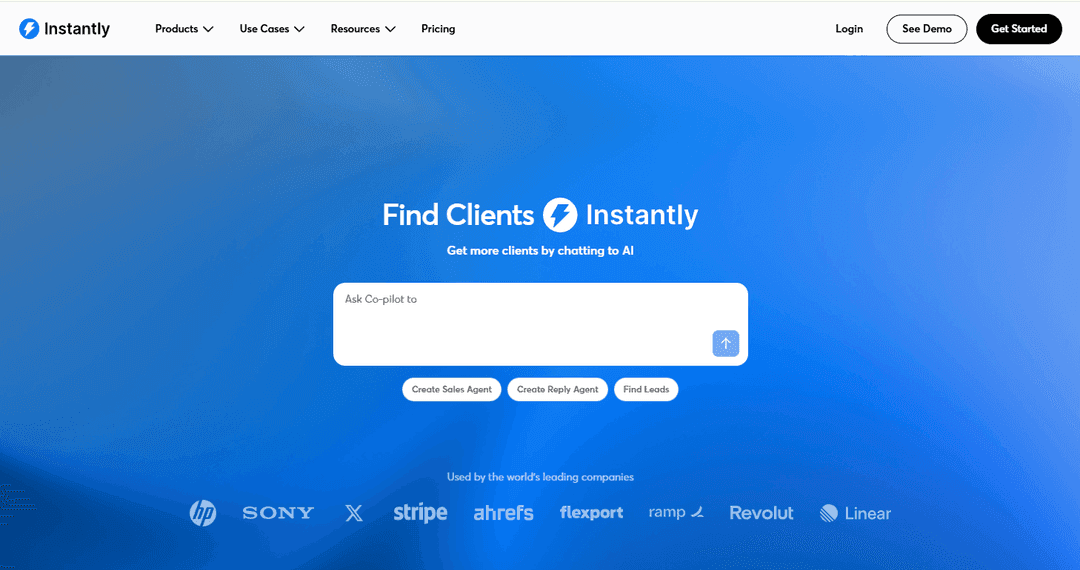
Now run the math for a team of three. Say each rep works 400 prospects a month, a normal load for a small team, and touches each one four times. That's 1,200 new contacts and 4,800 emails a month.
Run the math for a team of three
The 4,800 sends fit inside Growth's 5,000-email allowance with almost nothing to spare. The 1,200 contacts do not fit inside Growth's 1,000-contact allowance at all. So the team moves sending to Hypergrowth at $97 a month and adds Growth Credits at $47 to source the list. The working price lands at $144 a month, against a $47 sticker.
Pay annually and the same pair costs $115.20 a month. Buy the Starter bundle instead and you pay $94 monthly or $85 annually, which packages 5,000 emails, 1,000 contacts and 1,500 credits, and throws in the AI Sales Agent. Read those two numbers side by side and the bundle only wins on the annual line, and only because of the agent.
One more detail worth checking yourself before you sign. On the day we looked, Instantly's Hypergrowth card advertised 125,000 emails a month while the feature comparison table further down the same page said 100,000. Two numbers, one plan, one page. Confirm which one your contract says.
None of this makes Instantly expensive for what it does. It does make the sticker price and the working price two different numbers, and that gap is why you're reading a page like this one.
Why people leave Instantly?
Instantly holds a 4.8 out of 5 on G2 across more than 4,000 reviews, and it's earned that score. Its Trustpilot average sits closer to 3.8, and the gap between the two tells you where the friction lives. Four complaints repeat across G2, Trustpilot and the r/coldemail threads.
The contact cap on the entry plan
Growth allows 1,000 uploaded contacts. A single rep working a normal week fills that in three weeks. Reviewers describe the same arc every time: the plan looks generous during the trial, then the ceiling arrives in month two and you're paying double. The send allowance and the contact allowance run out at different speeds, which makes the plan hard to size in advance.
The modules stack
This is the loudest theme in recent reviews. Teams sign up for the outreach price, then switch on the lead database, then the AI reply agent that lives on a higher bundle, and the invoice stops resembling the page they bought from. Nobody's accusing Instantly of hiding the tabs. The complaint is that the entry price advertises one meter while the job needs two.
Deliverability that the dashboard does not predict
Reddit threads through early 2026 describe healthy warmup scores inside the app alongside campaigns landing in spam, and done-for-you domains arriving with weak reputation. Warmup activity and real inbox placement are two different measurements, and the dashboard reports the first one. Every sender on shared infrastructure carries some version of this risk, so it's a category problem that Instantly happens to be large enough to attract complaints about.
Email and nothing else
Instantly runs email. It doesn't automate social touches, and it won't fold them into a sequence. Teams selling into markets where buyers ignore cold email either add a second tool or move to a platform that covers both channels. That last complaint drives more switching than the other three combined.
If your problem is the copy rather than the platform, our 12 cold email templates that get replies will help faster than any migration you're considering.
Discover the 9 best Instantly alternatives
The order runs from the tool that changes the input, through the tools that replace the sending, to the ones that widen the channels. Read the price paragraph in every entry before the bullet list, because that's where these products differ most.
1. Gojiberry
Gojiberry is an AI-powered multichannel prospecting platform. It tracks more than 30 buying-intent signals across socials and the web, surfaces the leads who are in market right now, and triggers personalized outreach across several channels. Instantly decides how much you send. We decide who's worth writing to.
- 🔔Signals, not lists: The platform watches hiring moves, funding, role changes and public activity, then pushes the accounts that just changed state.
- 🎯Outreach that names the trigger: Each message carries the signal that produced it, so the first line has a reason to exist.
- 🔄Several channels from one sequence: Email and social senders run together. Every plan carries 2 social senders.
- 🤝One fee for the team: The price covers the whole team rather than climbing per seat. A team of six pays what a team of two pays.
- ✅Buying signals arrive before the competition writes
- ✅Contact data rides along with the plan
- ✅One flat fee whatever your headcount
- ✅A free plan that needs no card
- ❌We do not replace a bulk sender, and we say so
- ❌Volume ceilings sit below what an agency needs
- ❌A younger template library than the 2018 platforms
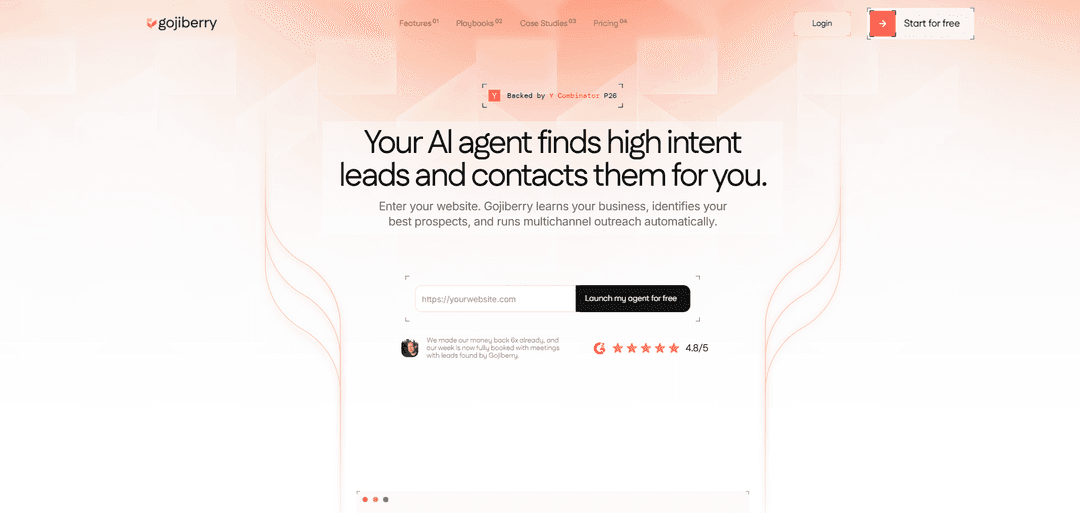
Start on the free plan, then $99 a month, flat, for the whole team. You won't find a per-seat multiplier or a credit meter running underneath. A three-person team pays $99. A ten-person team pays $99.
Instantly will tell you how many people opened. It won't tell you which of your 1,200 contacts changed something this week. That's the whole product, and it's the variable left to change once the sending already works.
2. Smartlead
Smartlead is the closest like-for-like swap for Instantly, and the two products argue over the same customer. Unlimited mailboxes, unlimited warmup, a unified master inbox and an API that agencies build on. Its pricing ignores how many people log in, and that's why lead-gen agencies keep landing here.
- 📤Unlimited mailboxes on every tier: Connect fifty inboxes on the $39 plan without a surcharge.
- 🔁Sender rotation by default: Volume spreads across every connected account inside a campaign.
- 🧩Client workspaces: Agencies run separate portals per client from the Pro plan upward, at $29 a month each.
- 💬Master inbox with AI sorting: Replies from every mailbox land in one view, tagged by sentiment.
- ✅The cheapest serious sender here
- ✅No per-seat and no per-mailbox fee
- ✅Contacts and sends run on separate meters, so you watch both
- ✅White-label portals no rival matches at this price
- ❌The premium warmup pool costs $59 a month extra on Base and Pro
- ❌No contact database, so you arrive with the list
- ❌The 2,000 active leads on Base fill up in a fortnight
- ❌Support responsiveness draws the most critical reviews
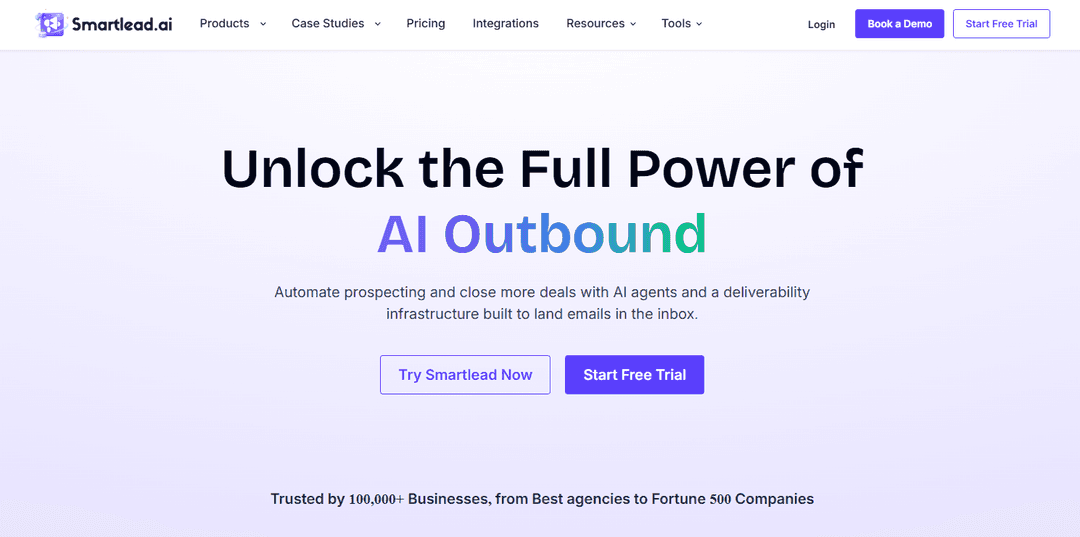
Base costs $39 a month for 2,000 contacts and 6,000 sends. Pro jumps to $94 for 30,000 contacts and 90,000 sends. Unlimited Smart runs $174 and Unlimited Prime $379. Annual billing takes 17% off every tier. You'll want to budget the $59 warmup add-on if you sit below Unlimited Smart, plus mailboxes at roughly $4.50 each.
Ask Instantly for a branded client portal and it'll point you at a bundle upgrade. Smartlead sells the same thing as a $29 add-on from Pro upward. We wrote the full comparison in Smartlead vs Instantly, and a wider roundup in our Smartlead alternatives guide.
3. Saleshandy
Saleshandy answers the exact complaint that opened this article. Sending, warmup and contact data sit on one subscription, so you won't stack modules. Every outreach plan carries lead credits instead of selling them on a second meter.
- 📦One bill for two jobs: Starter hands you 1,500 lead credits every cycle alongside the sending allowance.
- 🔍Waterfall enrichment on one credit: Saleshandy queries eight providers in sequence and verifies the result, and it charges a single credit for the whole chain.
- 👥Ten seats on the middle tier: Pro covers a team of ten, so a five-person team pays once rather than five times.
- 💰Nothing charged for a miss: An unverified email costs zero credits, which changes the real cost per contact.
- ✅The cheapest route to data and sending under one subscription
- ✅Unlimited mailboxes on every plan
- ✅852M contacts and 42M company profiles in the search
- ✅Seven-day trial with no card
- ❌Starter carries one seat only
- ❌Monthly billing costs about 20% more than annual
- ❌The mailbox add-on demands a 25-mailbox minimum
- ❌The interface tries to hold a lot at once
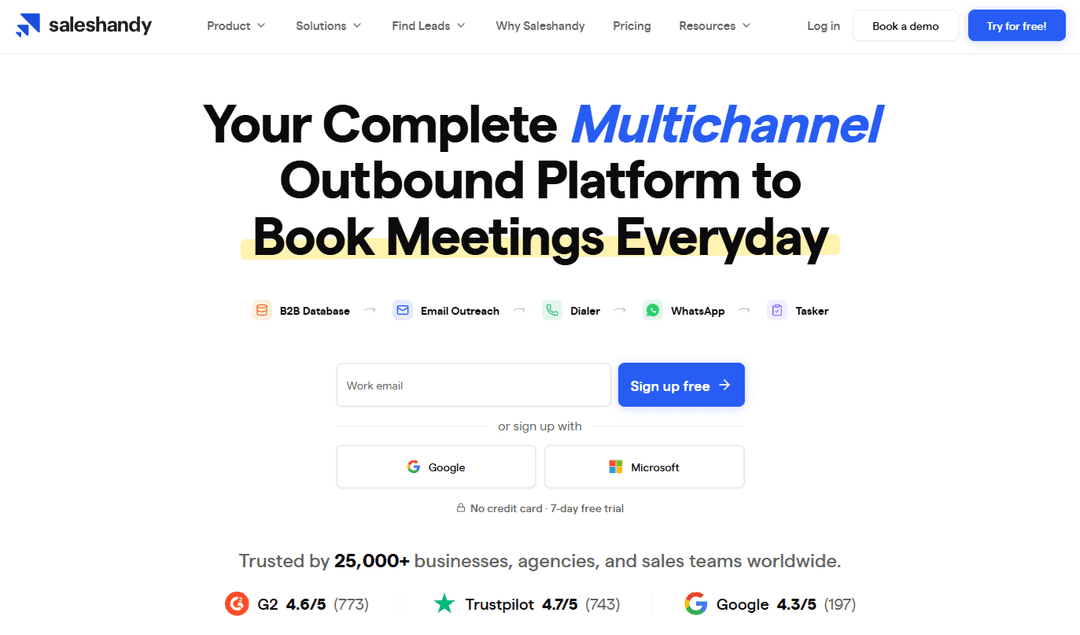
Starter costs $34 a month billed annually, or $41 monthly, for 2,000 active prospects, 6,000 emails and 1,500 lead credits. Pro moves to $76 annually or $99 monthly, for 30,000 active prospects, 100,000 emails, 4,000 credits and ten seats. Scale sits at $149 annually. The email infrastructure add-on runs $3.49 per mailbox a month with a 25-mailbox floor, and you'll pay $14 a year per domain.
One invoice carries the sending allowance and the contact credits at the entry tier. Instantly splits those across two subscriptions, and you can't undo that split from inside the product.
4. Lemlist
Lemlist built its name on personalization that survives a second look. Custom images, video thumbnails and landing pages that carry the prospect's own details. It has since grown into a sequence builder that mixes email, social steps, calls and WhatsApp in one flow. The multichannel plan is the one almost everybody buys, and it prices per seat.
- 🎨Personalization you can see: Dynamic images and landing pages adapt per lead, which lifts reply rates on saturated lists.
- 🔀Channels inside one sequence: A step can send an email, then trigger a social touch, then queue a call.
- 📞In-app calling on the top plan: Reps dial from the same screen that holds the sequence.
- 🧪Lemwarm on every paid plan: Warmup rides along rather than arriving as an add-on.
- ✅The best creative personalization here
- ✅One sequence covers email, socials and calls
- ✅A 450M-record database sits behind the search
- ✅Warmup costs nothing extra
- ❌Per-seat pricing multiplies fast on the multichannel plan
- ❌Enrichment credits meter separately at $0.05 an email
- ❌Phone reveals cost $0.20 each, among the steepest here
- ❌Reviewers call the credit model the weak spot
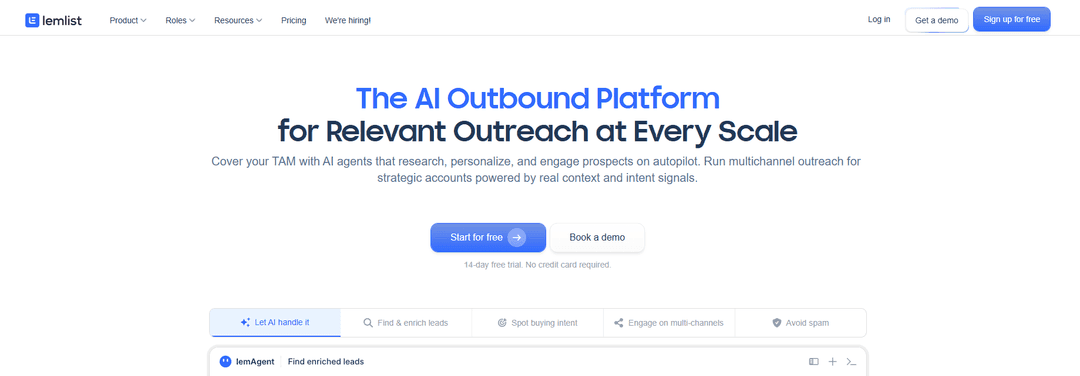
The email plan costs $69 a month and Multichannel Expert costs $109 per user a month at the monthly rate, with roughly 20% off for annual commitment, which brings the multichannel seat to about $87. Verification runs $0.05 an email and phone numbers $0.20. Three reps on Multichannel Expert reach $327 a month before you've burned a single credit.
A social touch and an email inside the same branch: Instantly doesn't build that, and Lemlist has built little else for five years. For the detailed head-to-head, read Smartlead vs Lemlist.
5. Apollo
Apollo puts a large B2B database and a sequencing engine behind one login, and it opens a free account that never expires where rivals put a countdown. That combination settles the second question most buyers arrive with. The database is why people buy it. The credit pool decides whether the price you signed for is the price you'll pay.
- 📊Database and sequencing together: Build a list and start the sequence without exporting anything.
- 🔎A free tier that renews: 900 credits per seat every year, plus two sequences and 250 daily sends, and no card at signup.
- 📈Intent topics from Basic upward: Six topics on Basic and twelve on Organization, which narrows the list before you write.
- 🧠AI research and email drafting: Apollo drafts from the record it already holds on the contact.
- ✅A genuine free plan, not a countdown
- ✅One credit reveals an email, so the math stays readable
- ✅Buying intent arrives at the $49 tier
- ✅Roughly 90% contact accuracy in user reports
- ❌Credits expire at the end of every cycle
- ❌A phone reveal burns eight credits against one for an email
- ❌Organization demands three seats, so its real floor is $357 a month
- ❌Free-plan limits have moved without notice
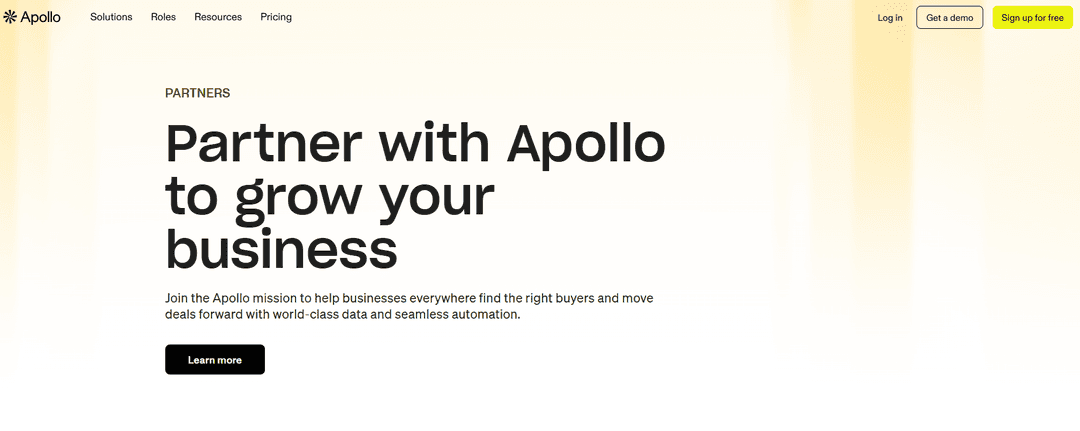
Free costs nothing. Basic runs $49 per user a month annually, or $59 monthly, for 30,000 credits a year. Professional costs $79 annually or $99 monthly for 48,000 credits. Organization reaches $119 annually or $149 monthly, and the three-seat minimum means you'll write $357. We broke the credit math down in full in our Apollo pricing guide.
A database seat that costs nothing for as long as you want it. Instantly sells no such thing, so Apollo carries the free answer here.
6. Salesforge
Salesforge charges neither per seat nor per mailbox, which makes it the structural opposite of Lemlist. It runs inbox and social outreach inside one sequence, pools every reply into an inbox it calls Primebox, and bundles warmup instead of selling it. Growth carries unlimited users, so headcount doesn't move the invoice.
- 🌍Sequences in 21 languages: The personalization model writes outside English, which matters for European lists.
- 🤖Agent Frank for full delegation: An AI SDR runs the motion end to end for teams that want to hand it over.
- 📬One inbox for both channels: Email replies and social replies share one thread view.
- 🔗Its own mailbox supply: Mailforge and Infraforge sell the domains and inboxes that feed the sequences.
- ✅Unlimited mailboxes and unlimited users on Growth
- ✅Warmup included at no extra charge on both plans
- ✅One conditional sequence covers the inbox and the feed
- ✅Multi-language personalization that rivals skip
- ❌No permanent free plan, only a 14-day trial
- ❌Pro allows 1,000 active contacts, which a five-touch cadence eats fast
- ❌Contact data lives in a separate product
- ❌Agent Frank starts at $499 a month and needs a demo
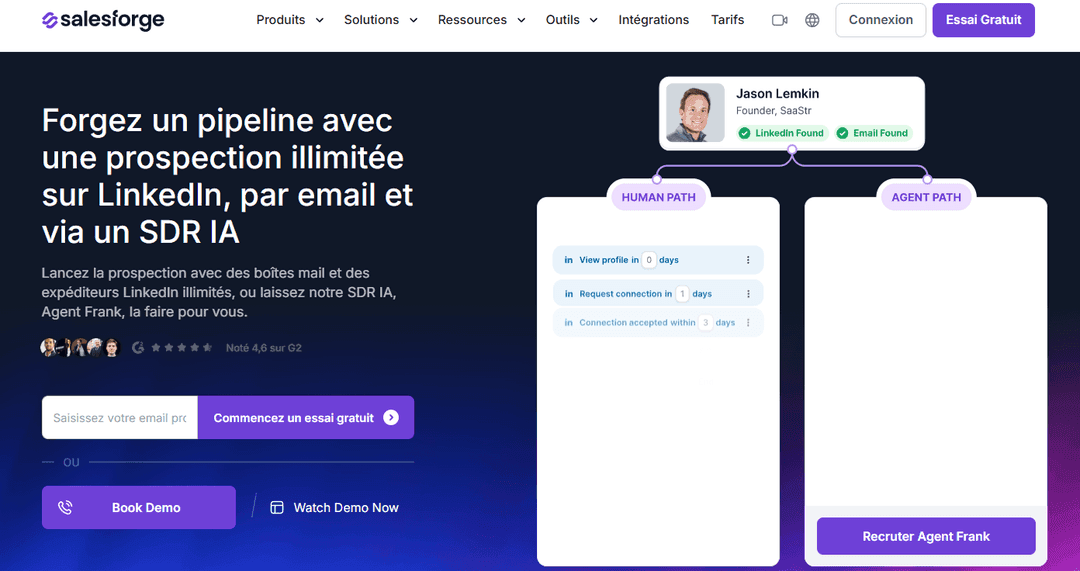
Pro costs $40 a month billed annually, or $48 monthly, for 1,000 active contacts, 5,000 emails and one social sender. Growth costs $80 annually or $96 monthly for 10,000 active contacts, 50,000 emails, unlimited social senders, unlimited users and API access. The trial caps at 25 emails, so you'll tour the interface rather than run a campaign.
Instantly won't add a social step to a sequence at all. Salesforge treats both channels as one motion, and it does it in 21 languages.
7. Woodpecker
Woodpecker predates most of this list and its pricing shows a different philosophy. You don't buy a tier. You drag a slider to the number of prospects you plan to contact each month and the price follows at $7 per 100 contacted prospects, with everything else thrown in free.
- 🔒Deliverability as the product: Adaptive sending, inbox rotation, domain audits and bounce protection all ship at the entry level.
- 📅Sends in the prospect's timezone: A message lands at nine in the morning where the reader sits.
- 🧭A price you can predict: Contact 500 people, pay $35. Contact 2,000, pay more. Nothing else moves.
- 📌Free warmup and verification: Four warm-ups and unlimited catch-all verification come with the entry slider position.
- ✅Unlimited team members and mailboxes at every level
- ✅16,000 monthly emails included at the 500-prospect setting
- ✅Annual billing takes 33% off, the deepest discount here
- ✅Fourteen years of deliverability tuning behind it
- ❌Integrations, API and webhooks cost $20 a month extra
- ❌Social outreach costs $29 a month per connected account
- ❌Only 100 lead credits included, then $10 per 500
- ❌The agency panel adds $27 per active client
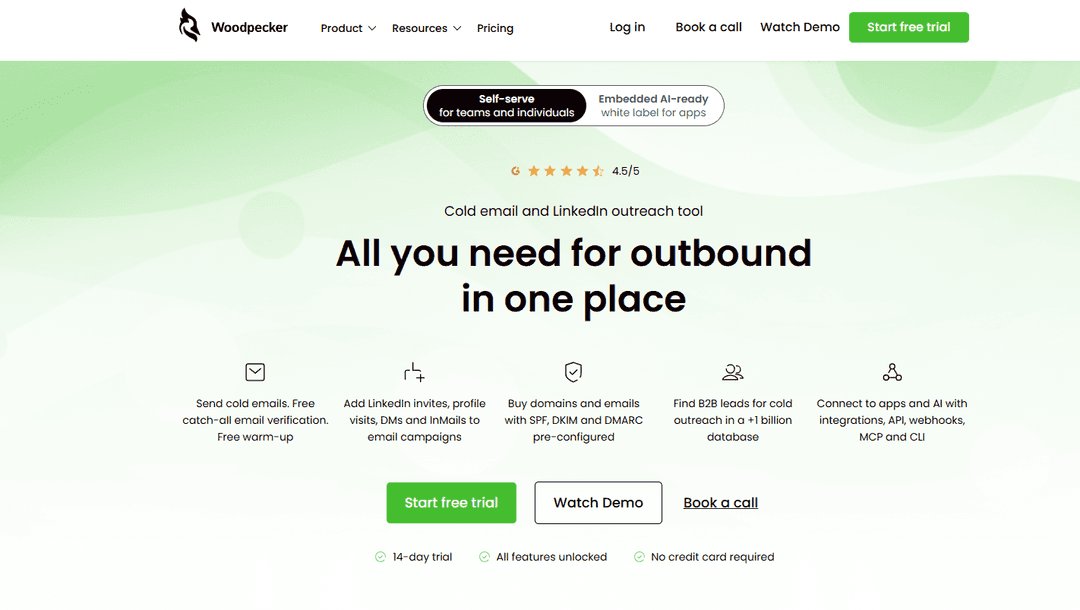
At 500 contacted prospects the bill reads $35 a month, and annual commitment cuts that by a third. That position includes 16,000 emails, 4,000 stored prospects, four warm-ups and 100 Lead Finder credits. Extra mailboxes cost $4 to $6 each, and you'll pay $59 a month for a dedicated server.
Buy the volume you need rather than the tier above it. Nothing in Instantly's four tabs lets you do that, and Woodpecker prices nothing else.
8. Reply.io
Reply.io has sold sales engagement since 2014, and the age shows in both directions. The sequence builder handles email, social touches, calls, SMS and WhatsApp with conditional branching that newer tools have yet to match. It also splits those channels across plans and add-ons, so the seat you're quoted rarely equals the seat you buy.
- 📞Calls and SMS beside the email: One cadence covers the channels most SDR teams already work.
- 🎧Jason handles the replies: An AI agent drafts responses and books meetings from inside the same inbox.
- 🔧Branching that reacts to behavior: Steps change depending on opens, clicks and replies rather than running a fixed ladder.
- 📥Free while you evaluate: You'll build and inspect a sequence before anyone asks for a card.
- ✅The deepest channel coverage in this comparison
- ✅An agency plan at $166 a month with unlimited clients
- ✅Contact-based rather than seat-based on the entry plan
- ✅A no-cost tier, where most rivals now put a countdown
- ❌Social automation and calling arrive as paid add-ons
- ❌Only 50 live data credits a month on outreach plans
- ❌The agency plan bills annually with no monthly option
- ❌Jason starts at $500 a month
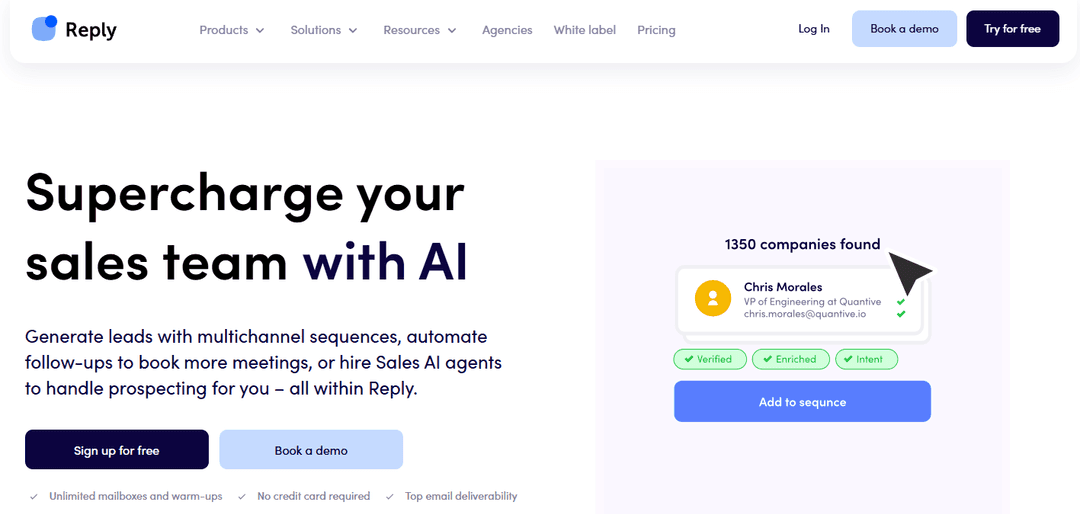
Email Volume starts at $49 per user a month annually, or $59 monthly, for 1,000 active contacts with unlimited email and warmup. Multichannel costs $89 annually or $99 monthly. The Agency plan runs $166 a month, annual only. Switch on the social and calling modules and you're closer to $187 for a working seat.
A call, an SMS and an email in one conditional branch. Instantly never claimed those channels, and Reply.io has run them since 2014.
9. Snov.io
Snov.io bundles an email finder, a verifier, drip campaigns, warmup and a light CRM into one cheap panel. Nothing in it leads its category, which is beside the point. For a founder running the first 500-prospect campaign, one subscription covers the entire workflow.
- 🧮One credit pool for everything: Finding, verifying and saving a prospect all draw from the same balance.
- 📁Sending does not burn credits: Campaigns draw on a separate recipient quota, and follow-ups within the cycle cost nothing.
- 🔬A 500M-record search: Fifteen filters narrow by title, location, industry and company size.
- 💡Unlimited seats on the Pro tiers: Credits pool across the team rather than splitting per person.
- ✅The lowest annual sticker here
- ✅A free tier that renews rather than expiring
- ✅Prospecting and sending under one login
- ✅Unlimited email accounts on paid plans
- ❌Credits expire at the end of every cycle
- ❌Starter caps warmup at three mailboxes
- ❌A-Z testing and behavioral conditions sit behind Pro
- ❌Social automation costs $69 a month per slot on top
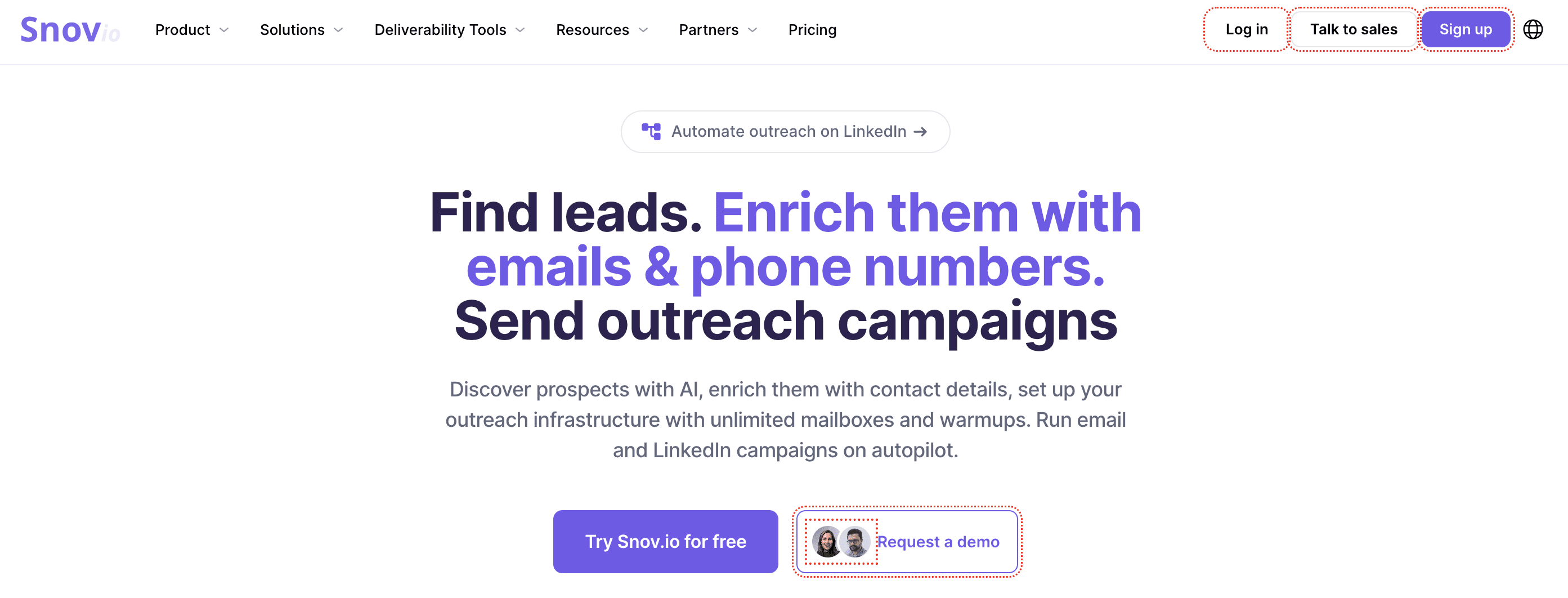
The Trial renews 50 credits and 100 campaign recipients. Starter costs $39 a month paid monthly, or $29.25 annually, for 1,000 credits, 5,000 recipients and three warm-up mailboxes. Pro tiers climb from $99 for 5,000 credits to $738 for 100,000. Per-credit cost varies about fourfold across tiers, so if you undersize the plan you'll quietly double your cost per lead.
Under $40 buys a solo founder prospecting and sending without a second subscription. The nearest Instantly pairing costs $94.
Nine senders. One list problem.
Every tool above moves email well. None of them tells you which accounts changed this week. Gojiberry watches over 30 buying signals and hands you the ones worth writing to.
See who is in market nowIs there a free Instantly alternative?
Yes, four of them, and the gap between a permanent tier and a trial decides which one helps you. A free plan renews. A trial counts down, then locks the door. Most pages covering this question don't separate the two.
Tools with a real free plan
- Gojiberry. No card at signup. It caps the volume of signals and outreach, and it keeps running.
- Apollo. 900 credits per seat annually, granted monthly, with two sequences and 250 daily sends. Enough to test the database, not enough to run outbound.
- Reply.io. A permanent login that lets you build and inspect sequences before you pay.
- Snov.io. The Trial plan renews 50 credits and 100 campaign recipients every cycle rather than expiring.
Tools that offer a trial instead
- Smartlead. A free trial, no card required, then the Base plan at $39.
- Saleshandy. Seven days.
- Lemlist. Fourteen days, and sending new campaigns stops when it ends.
- Salesforge. Fourteen days, capped at 25 emails and 10 contacts.
- Woodpecker. Fourteen days or 100 emails, whichever arrives first.
Instantly itself sells paid tiers on its pricing page today, so plan for a bill from day one. The four permanent tiers above split into two jobs: Apollo and Snov.io find people for you, while Gojiberry plus Reply.io reach them. A founder validating an offer can run Apollo's free credits into Reply.io's no-cost account and spend nothing for a month.
Which alternative costs the least
Snov.io Starter at $29.25 a month on annual billing carries the lowest sticker. Saleshandy Starter follows at $34 annually. Woodpecker lands at $35 for 500 contacted prospects, and Smartlead Base at $39. Not one of those four numbers survives the second job.
Now the caveat, because the ranking flips the moment you add the second job. Smartlead's $39 buys sending and nothing else, so a team that also needs contacts pays $39 plus whatever a data tool costs, which puts the working total above $80. Snov.io's 1,000 credits find roughly 1,000 people once, then the balance resets to zero.
Saleshandy's $34 includes 1,500 lead credits and 6,000 sends on the same invoice. Compare working totals rather than entry prices and it wins the cheap slot outright, which is why it sits third on this list rather than eighth.
The cheapest tool and the cheapest pipeline are different questions
A $34 subscription that sends 6,000 emails to a list you guessed at costs more than a $99 subscription that sends 600 to accounts that just changed something. Google now holds bulk senders to a spam complaint rate under 0.3%, and volume against a cold list is the shortest route to that threshold. Read Google's sender guidelines before you buy on price alone.
How to choose yours in three questions
Do you send email only or do you need socials and calls too?
Email only points you at Smartlead, Woodpecker or Saleshandy. Add social touches and the field narrows to Salesforge, Lemlist plus Reply.io. Add a dialer and only the last two survive. Gojiberry runs email and social senders together, so it belongs in the second group. Answer this one first, because it'll eliminate more tools than the other two combined.
What do you already pay for outside your sending tool?
List the invoices. A data subscription, a verifier, a warmup service, a Zapier plan for CRM sync. Saleshandy folds the first two into one bill and Woodpecker throws in verification free. If you already pay for Apollo or a similar database, buy a pure sender and stop there. Paying twice for contacts is the overspend we see most, and it's the easiest one to miss.
Do you struggle to send enough or to pick the right people?
This is the question that matters. If your reps can't get volume out of the door, buy a bigger sender and the problem goes away. If your volume is fine and your replies are not, no sender on this page fixes anything, because they all move the same message to the same list. Come to us instead if that second sentence describes your quarter.
Senders fixed the sending. Nobody fixed the choosing.
Get leads that changed this weekGojiberry against Instantly
These two products answer different questions, and comparing them on sends misses the point. Instantly asks how much email you can move. We ask which accounts deserve it, and that's a different product. A team that needs both usually keeps a sender and points it at what we surface.
Where we lose: point Gojiberry at a 50,000-address blast and it will disappoint you. That's not the product. Instantly, Smartlead and Salesforge all handle that job better, and an agency running six clients should buy one of them.
What support looks like on each side
We haven't timed a first human reply from a paying account across nine vendors. That test deserves real numbers, so we'd rather leave the table empty than fill it with estimates. What we can describe is the shape of each support model, because the vendors publish it.
Self-serve chat
Instantly, Smartlead and Snov.io answer in-app, with priority queues reserved for higher tiers. Support responsiveness draws the most critical reviews across all three.
Tiered human contact
Saleshandy adds live chat at Pro and a dedicated account manager at Scale. Reply.io and Lemlist follow a similar ladder, so the seat you buy decides who picks up.
Founder-led onboarding
We are small enough that a human walks every new team through setup, which is an advantage we will lose as we grow. Judge it while it lasts.
What intent-based outbound produced for four teams
60%
of Wispra's weekly demos now come from intent signals rather than a static list.
Read the case study100+
meetings for GTE Localize after they swapped email blasts for intent-led outreach.
Read the case studyOne number explains why timing beats volume. B2B contact data decays at roughly 2.1% a month, which strips about 22.5% off a list over a year. Median job tenure in the United States runs 3.9 years, and 22% of employees haven't reached their first year in the job. Your list rots while you work it, and every one of those role changes is a reason to write.
Why we built this instead of another sender
Roman spent his days prospecting on socials before Gojiberry existed. He tested buying signals by hand, one account at a time, scrolling for the funding post or the new head of sales and writing the moment he found one. The reply rates were excellent and the method did not scale past one person. The bottleneck was never the sending. It was the twenty minutes of research that made each message worth sending.
Coco.ai came first and taught us the rest. Running outbound for a product nobody had heard of, we watched a well-built cold email sequence return almost nothing against a list we had guessed at, then watched the same sequence work against forty accounts that had just changed something. We built Gojiberry to do that research automatically, for teams of two to ten who cannot spare a full-time researcher.
What people ask before they leave Instantly
What are some free alternatives to Instantly?
Four of the nine open a real free tier instead of a countdown. Gojiberry asks for no card at all. Apollo grants 900 credits a seat each year, two sequence slots and 250 daily sends. Reply.io keeps a no-cost account for building and inspecting sequences. Snov.io renews 50 credits and 100 campaign recipients every cycle. Smartlead, Saleshandy, Lemlist, Salesforge and Woodpecker hand you seven to fourteen days instead.
Can I use Instantly for free?
Instantly's pricing page sells paid tiers only, and the cheapest of them costs $47 a month for sending. The company has run trials in the past, so check the current signup flow before you assume one exists. If a permanent free tier is what you need, Apollo, Reply.io, Snov.io and Gojiberry all publish one.
What does Instantly do?
Instantly runs cold email at scale. It connects unlimited mailboxes, warms them, rotates sending across them, and manages replies in one inbox. Separate subscriptions open a 450M-record contact database and a CRM layer. It does not automate social channels, and it does not track buying intent.
Which Instantly alternative costs the least?
Snov.io Starter carries the lowest annual sticker at $29.25 a month, and Saleshandy Starter follows at $34. Compare working totals instead and Saleshandy wins, because its $34 includes 1,500 lead credits and 6,000 sends on one invoice while the cheaper option meters data separately. The cheapest email-only tool stops being cheapest the moment you add a contact database.
Can I run an email and a social step in the same sequence on Instantly?
No. Instantly automates email and leaves the other channels to you. Salesforge, Lemlist and Reply all run both channels inside a single sequence, and Gojiberry pairs the inbox with 2 social senders on every plan. This gap drives more switching than any pricing complaint we read.
Why do people compare Instantly and Smartlead so often?
Because the two products solve the same problem with the same core promise. Both connect unlimited mailboxes for a flat fee, both warm every inbox, and both pool replies into one view. The differences sit at the edges: Smartlead sells white-label client portals and charges $59 for its premium warmup pool, while Instantly bundles an AI sales agent and sells contacts on a second meter. The head-to-head earlier in this article covers the rest.
Will switching tools fix my reply rate?
Only if the sending is what broke. If your emails land in the inbox and nobody answers, a new sender moves the same message to the same people. Fix the list first: our free cold email generator and follow-up email generator will tell you fast whether the copy or the targeting is the weak link.
More mailboxes will not fix bad targeting
Gojiberry watches more than 30 buying signals and hands you the accounts that deserve a message this week. Your sending tool then does the job it is good at.
Get your first leads for free Read what teams got
Your next 10 customers are already out there.
Let your agent find them.
Free Trial · Live in 5 minutes · Cancel anytime