12 best Topo.io alternatives to find leads in 2026
Romàn
Quick quiz
Which Topo alternative fits your team?
No email required.
Question 1 / 3
What slows your outbound down most right now?
Question 2 / 3
How many people sell at your company?
Question 3 / 3
What do you want on your screen in 90 days?
🎯
Your match
Gojiberry fits how you sell
You need timing before you need volume. Gojiberry watches more than 30 buying signals, checks each account against your ICP, and opens the conversation on the channel where the signal fired.
- One flat price for everyone who sells
- Accounts ranked by what they did this week
- Email and social outreach from the same timeline
- No card and no call to start
Retake the quiz
📧
Your match
Salesforge and Agent Frank fit how you sell
Sending discipline is your constraint, and Agent Frank runs warmup, inbox rotation and follow-up better than most of this list. He works from a list you hand him though. If you want the list to arrive already sorted by who moved, that half is ours.
- Warmup and inbox rotation built in
- Approval mode before anything ships
- Signals still come from somewhere else
Retake the quiz
👥
Your match
Regie.ai fits a floor your size
At thirty reps the seat minimum stops mattering and the dialer starts paying for itself. Worth knowing before you sign: our flat price covers the same headcount for a fraction of that contract, without the parallel dialer.
- Parallel dialing and call coaching included
- 220 million contacts in the platform
- Annual terms with seat minimums
Retake the quiz
Topo runs outbound from one platform: buying signals, multichannel sequences, and an AI agent on top. OMR publishes 69 euros per user per month, and Topo's own pricing page shows no number at all. Three reps costs 207 euros a month, and every hire you make moves that number.
We went through twelve alternatives, checked what each one charges in August 2026, and sorted them by the bottleneck they fix. You'll find flat-price agents, per-seat platforms, a research engine and one workbench you assemble yourself.
Gojiberry finds your leads
Topo charges per seat. Gojiberry charges 99 dollars a month for the whole team, watches more than 30 buying signals, and hands you the accounts worth your time.
See who's in market nowTable of contents
The 12 best Topo io alternatives
Pick by bottleneck rather than by feature list. If you can't tell who's in market, start with Gojiberry or Coldreach. If you can't get the volume out safely, start with Salesforge or AiSDR. If you're short of names, start with Apollo.
Prices checked on each vendor's own pricing page in August 2026. Several of these bill per seat, so the entry figure covers one person and your team multiplies it. Where a vendor publishes nothing, we say so in its section rather than guess.
How we tested the 12 tools
We spent August 2026 on this comparison. For every tool we opened the vendor's own pricing page and copied the number it publishes, signed up wherever the product let us in without a call, read the public reviews on G2 and OMR, and settled each contradiction on the vendor's site rather than on a competitor's comparison page. That last rule mattered here: Salesforge writes that Topo stops at lead discovery, while Topo's product pages list multichannel sequences, managed email infrastructure and reply suggestions. We went with Topo.
One thing you won't find below: a scorecard of reply rates across twelve tools. We haven't run the same campaign on the same list through all twelve, and an invented percentage would be worth less than this sentence admitting it. When we run it, the numbers land on this page. We pay for every plan ourselves, and no vendor read a word of this before publication.
What each tool does and who it fits
Twelve tools, grouped by what they replace. Six of them run the whole motion for you. Three hand you the data and let you drive. Two are execution platforms you point at a list. And the first one doesn't start from a search at all.
1. Gojiberry
We built Gojiberry for the team that can't justify a seat license. It watches more than 30 buying signals across socials and the web, screens every account against your ICP, and opens the conversation on the channel where the signal fired. One price covers everyone who sells, so a fourth hire doesn't change the invoice.
- 🔔Signals first: Gojiberry tracks job changes, funding, hiring, competitor engagement and 30 more triggers, then ranks whatever moved.
- 🎯ICP screening: Gojiberry screens each account against your criteria before you see it, so the list stays workable by hand.
- 🤖Outreach that follows the trigger: The agent drafts and sends across email and socials from a single timeline.
- 💰Flat plan: Two social senders and unlimited users sit on the same subscription.
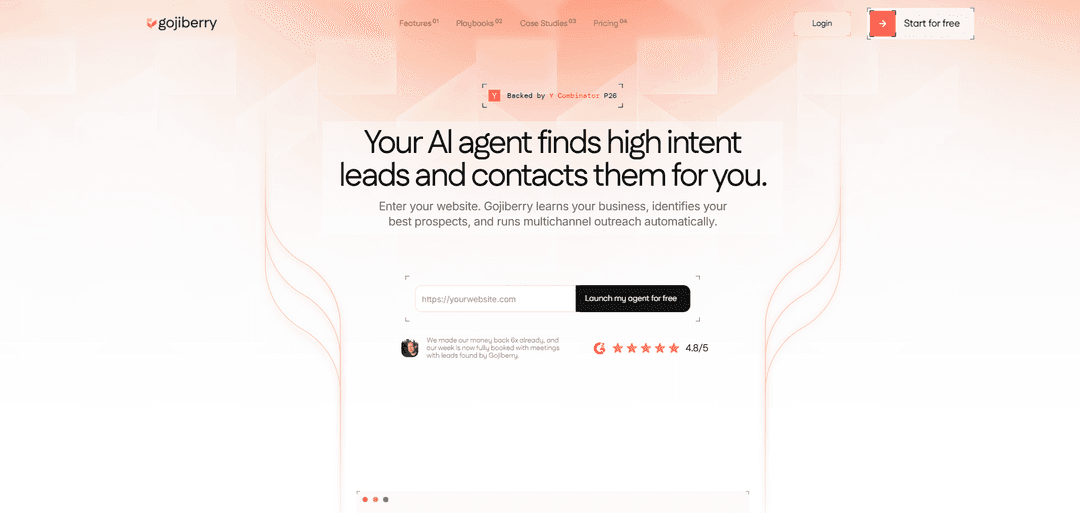
Gojiberry costs 99 dollars a month for the whole team, and you won't need a card or a call to start. Three reps pay 99 dollars, not 297.
Point us at a market where nobody publishes anything and a database will beat us. Point us at a market that moves and you won't find anything here that reaches the right account sooner.
2. Artisan (Ava)
Artisan sells Ava as a virtual BDR that owns the top of the funnel end to end. She pulls contacts from a 300 million record database, researches each one, writes the sequence, warms the inboxes and handles replies up to a booked meeting. Since the Ava 2.0 rebuild in May 2026 you don't need a call to sign up and launch a campaign.
- 🤝One vendor: Data, research, writing, sending and warmup land on a single invoice.
- 📤Email and socials: Ava runs both, and a paid dialer add-on queues calls for a human to make.
- 🧮Credit meter: A full campaign burns roughly 20 credits per prospect, so volume drives the real bill.
- 🚀Free tier: 300 credits a month let you read her writing before you pay for it.
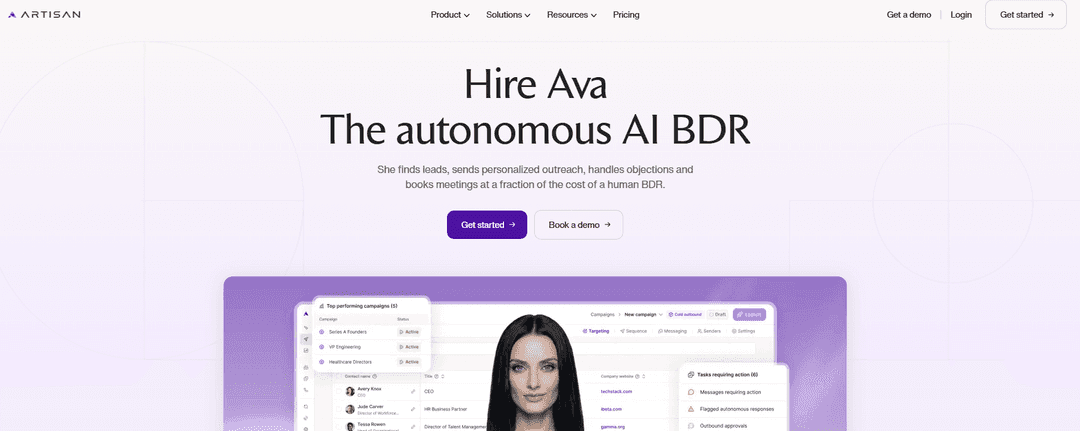
Intern runs 250 dollars a month on annual billing with 12,000 credits, Employee 600 with 30,000, and monthly billing adds about 10 percent. The power dialer's 67 dollars per seat on top.
It folds four subscriptions into one and doesn't ask anything of you before you try it, at the price of a meter that sets your budget instead of your plan.
3. 11x.ai
11x splits the job between two agents. Alice runs outbound prospecting across email and socials, Julian answers and places calls. The pitch is a digital worker rather than a tool, and the contract matches the pitch. 11x sells on annual terms after a scoping call, so you won't be starting here on a Tuesday afternoon.
- 📞Voice included: Julian handles inbound qualification and consented outbound calls, which almost nothing else here does.
- 🧠Bundled layers: 11x now ships contact data, website visitor tracking and deliverability infrastructure inside the platform.
- 🔒Annual terms: Buyers report 12-month commitments and, more recently, longer ones.
- 📈Coverage over craft: Reviewers rate the orchestration higher than the depth of the messages.
11x lists 36,000 dollars a year on its Growth plan and quotes everything above it. Julian carries a separate line, and buyers report first-year totals well past the sticker once implementation lands. We've gone deeper in the best 11x alternatives.
That number ends the conversation for a team of three, and it should. For a company that's already running ten reps with someone owning tooling, the two-agent split covers a channel the rest of this category skips.
4. AiSDR
AiSDR runs an agent called Ami across search, writing, sending and warmup. The plan provisions your domains and mailboxes, which removes the week most teams lose to deliverability setup. Every tier sits on the pricing page, so you don't need a call to build the budget.
- 🧪Metered by contacts: Plans count AI-researched contacts and messages rather than seats, and users stay unlimited from Explore up.
- 📅Quarterly terms: Explore and Scale bill three months in advance; only Solo runs commitment-free.
- 🔀Inbound as well: Ami answers site leads alongside the outbound motion.
- 📬Infrastructure supplied: AiSDR provisions roughly six mailboxes across two domains per 1,000 monthly messages.
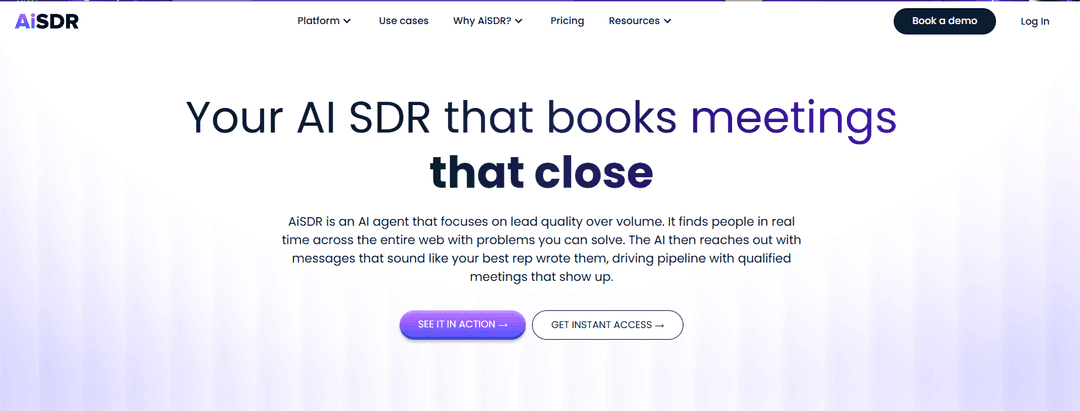
Solo starts at 250 dollars a month for 200 researched contacts and one user, with no commitment. Explore costs 900 dollars a month on quarterly billing, Scale 2,500, and you'll save roughly 20 percent on annual billing.
Nothing else here gets you sending faster with less setup. Then the quarterly invoice arrives. Twenty-seven hundred dollars up front is a real decision for a five-person company that hasn't sent a campaign yet.
5. Apollo
Apollo puts a large contact database and a sequencer behind the same login. You filter a list, reveal the contacts, and you're sending without exporting anything. For a team whose only problem is running out of names, it stays the cheapest complete answer here.
- 📚Database plus sending: Search, enrichment, sequences and a dialer live in one product.
- 🔎Filters rather than triggers: You choose the criteria and Apollo returns matches; the timing call stays yours.
- 📨Free plan: A no-cost tier lets you test the data on your own accounts before you commit.
- 🧰Credit ceilings: Email reveals and phone reveals draw on separate pools that gate heavy months.
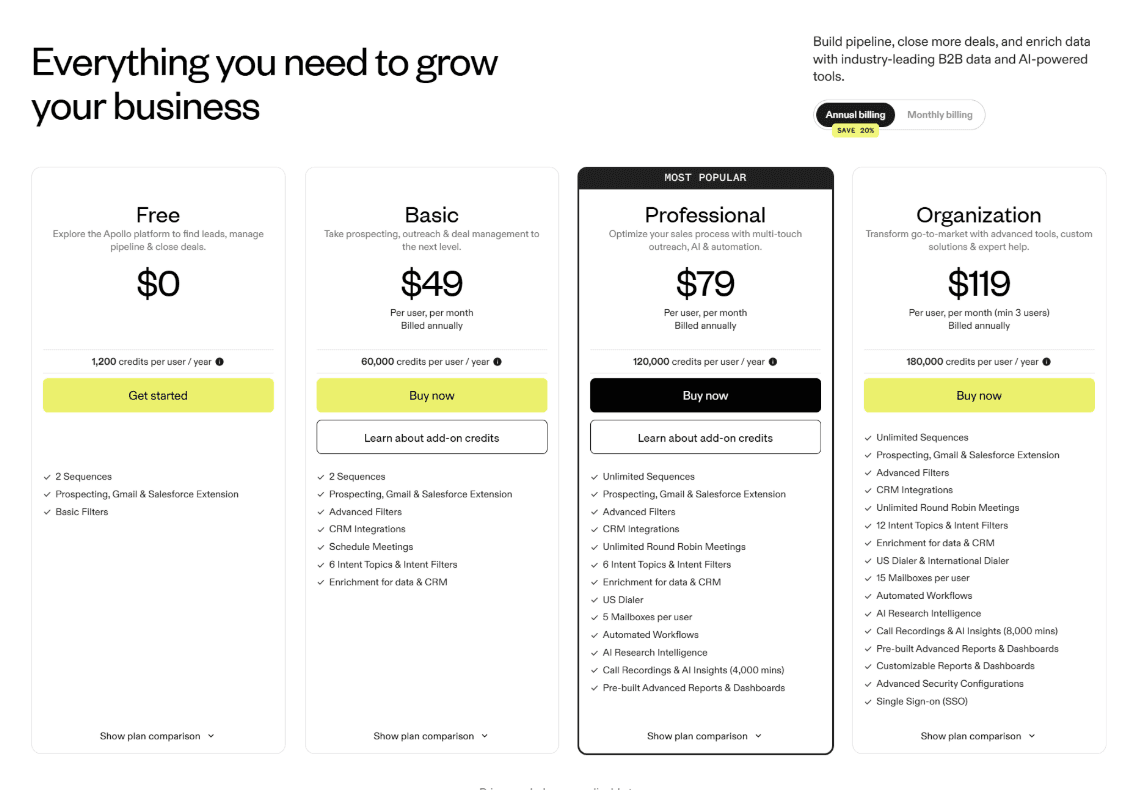
Apollo charges 49 dollars per user per month on annual billing, 59 dollars monthly, and keeps a free plan for a first look. Three reps land at 147 dollars a month. We've ranked the rest of the field in the best Apollo alternatives.
Nothing here gives you more names for less money, and nothing here does less to tell you which of those names isn't worth the send.
6. Coldreach
Coldreach sits closest to what we do. You describe the buying signal in plain English, it watches your market for that signal, and it doesn't write until it's read the company. Every message opens on a verified reason instead of a merge tag.
- 🔬Deep research: It reads the website, filings, hiring pages and recent news before drafting a first line.
- 📝Signals you define: You write the trigger as a sentence rather than picking from a fixed menu.
- 🌐Prices on the page: Every self-serve tier carries a number, and onboarding comes with all of them.
- 🧵One pass: Research, writing and sending run inside the same product.
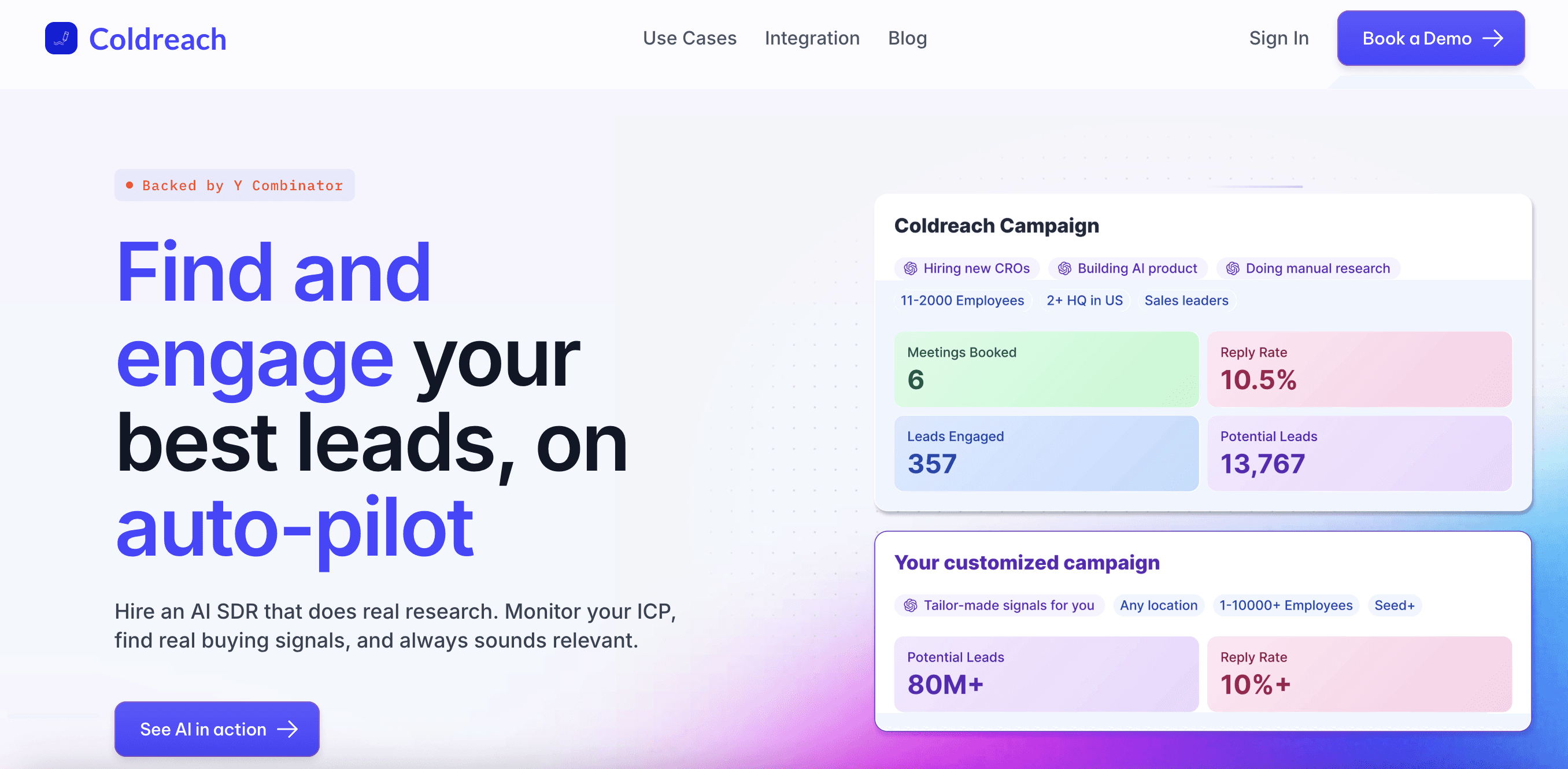
Starter costs 899 dollars a month, Growth 1,099, Pro 1,499 and Enterprise 1,999. If you'd rather hand the whole thing over, the managed version runs 3,000 dollars a month.
Timing is where it wins. Price is where it loses a two-person team.
7. Salesforge (Agent Frank)
Salesforge separates the platform from the agent. The platform runs human-led campaigns with warmup and inbox rotation. Agent Frank runs the same motion on his own, or waits for your approval on each message. Two products means two prices, which explains the gap you'll see quoted around the web.
- 📧Deliverability at the center: Warmup, inbox rotation and multi-provider sending carry the product.
- 🔁Auto or approve: Frank ships unattended, or he queues drafts and waits for your sign-off.
- 🏢Contacts included: A 500 million record search engine feeds the sequences without a second subscription.
- 🧩Infrastructure billed apart: Mailbox packages sit on a separate line from the agent.
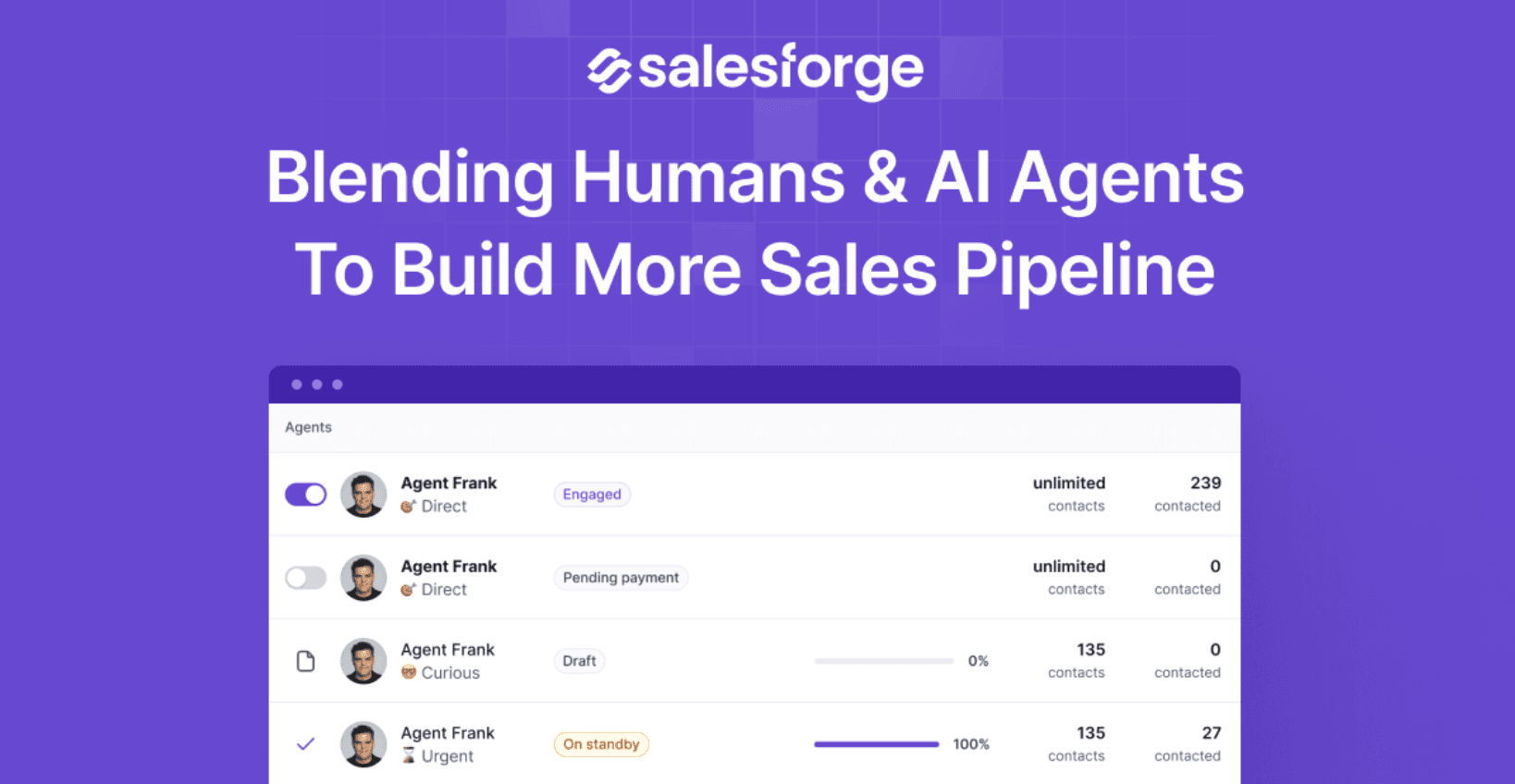
The Salesforge platform starts at 48 dollars a month. Agent Frank costs 599 dollars a month on quarterly billing, or 499 on annual, and you'll add from 33 dollars for mailbox infrastructure.
Frank reads no buying signals, so he'll write beautifully to a company that signed with your competitor last quarter. On sending discipline alone, nothing here beats him.
8. Regie.ai
Regie builds outbound around content and sequences, with agents that source leads, draft the copy and feed a power dialer. It aims at established sales floors, and the packaging doesn't hide it. Both published tiers carry a seat minimum and an annual term.
- 🎧Dialer in the box: Parallel dialing, call coaching and voicemail drops come with the platform.
- 📊Sequence agents: Static and dynamic sequencing run alongside intent prioritization.
- 👥Seat minimums: Ten seats on the entry tier, five on the higher one, both on annual contracts.
- 🔖Its own data: A 220 million contact database removes a separate subscription.

AI SEP costs 180 dollars per user per month with a ten-seat minimum, which puts the floor near 21,600 dollars a year. Force Multiplier Rep runs 499 dollars per user with a five-seat minimum, and you'll add about 150 dollars per user for the parallel dialer.
The seat minimum decides this one. Below ten reps you're paying for licenses nobody opens. Above it, the dialer and the content engine earn their line on the invoice.
9. Clay
Clay hands you a spreadsheet sitting on top of a hundred data sources, then steps back. You build the waterfall, write the prompts and push the output into whatever sends. You'll get more control here than anywhere else on this list, and you'll pay for it in hours.
- 🔗Enrichment waterfall: Clay queries source after source until one returns the contact you asked for.
- 🎨Prompt columns: AI columns research a company and write the opening line straight in the table.
- 📁Exports anywhere: Results push into your sequencer, your CRM or a webhook.
- 🔧Someone has to own it: Tables rot within weeks once the person who built them moves on.
Launch costs 167 dollars a month on annual billing, 185 dollars monthly, and credits meter every enrichment run. We've compared the field in the best Clay alternatives.
It replaces a data vendor and a research analyst at once, provided somebody on your side would rather build the machine than sell. If nobody volunteers, you've bought a spreadsheet.
10. ZoomInfo
ZoomInfo holds the deepest B2B dataset in this comparison, with org charts, technographics and intent topics layered over the contacts. Topo names it as one of the three American platforms it positions against. The commercial terms haven't moved in years: annual contract, quoted price, no self-serve door.
- 📦Depth: Org charts, technographics and firmographics go further than anything else in this list.
- 📌Intent topics: Third-party research signals sit next to the contact records.
- 🔍Credit gates: Exports and phone reveals draw on allowances your contract sets rather than the ones your month needs.
- 🏢Enterprise motion: Procurement, onboarding and a renewal negotiation come with the product.
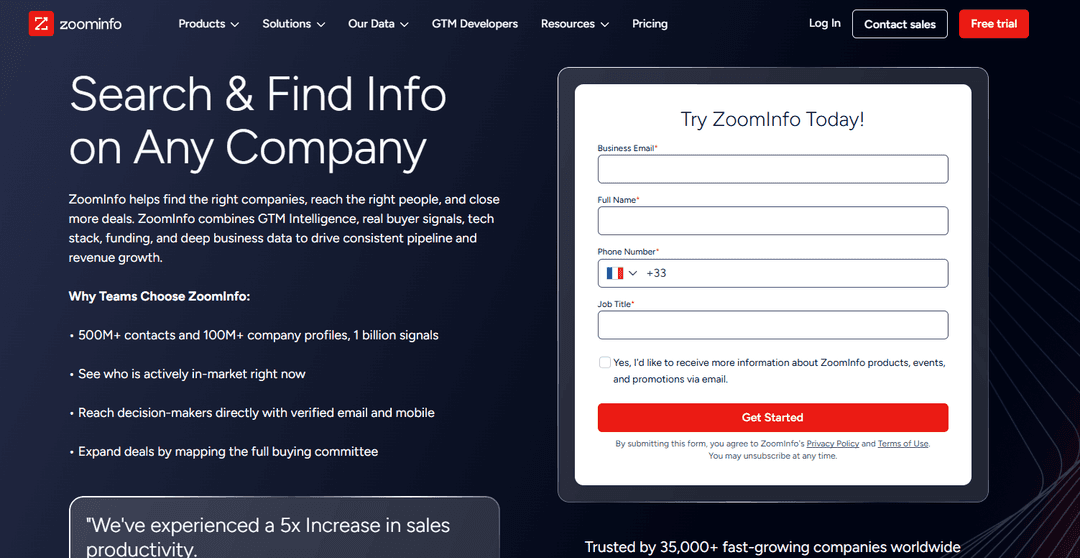
ZoomInfo publishes nothing. Buyers report around 15,000 dollars a year on the entry plan, climbing with seats and credits. We've pulled the reported numbers together in what ZoomInfo really costs.
Fifteen thousand dollars buys coverage a small team will never exhaust. Then the term arrives. You can't leave mid-year, and a company of three shouldn't sign for data it will use twice a week.
11. Amplemarket
Amplemarket bundles contact data, intent signals, sequencing and deliverability into one platform and one contract. It sits in the same lane as Topo, and it's one of the few names here that publishes an entry price. Seats arrive in blocks rather than one at a time.
- 🌍Data included: More than 200 million verified contacts ship with every tier.
- 📥Signals feed sending: Intent triggers start sequences inside the same product.
- 💡Copilot layer: An AI assistant drafts and prioritizes the day for each rep.
- 🔄Annual only: Every plan bills yearly, and credit pools renew on the same clock.
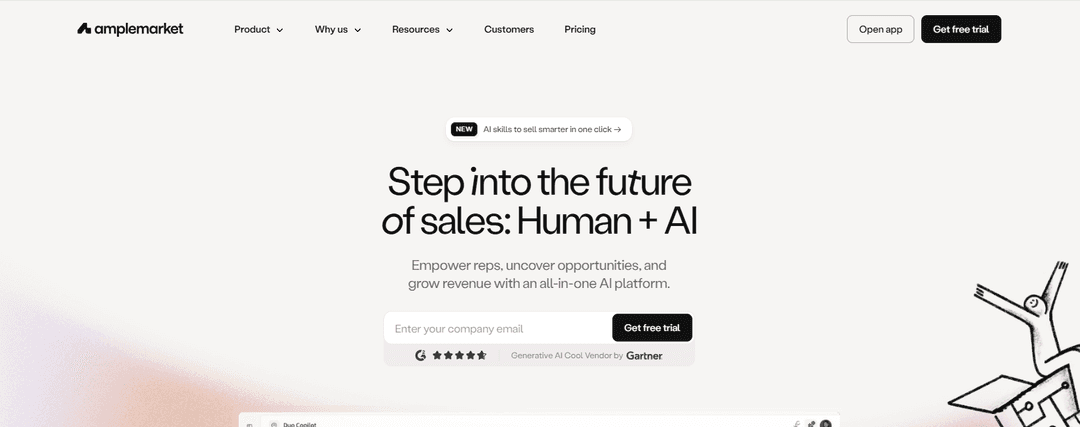
Startup costs 600 dollars a month on an annual term and includes two users. Growth and Elite go to quote, and extra seats bill separately. We've listed the cheaper routes in the best Amplemarket alternatives.
Six hundred dollars for two seats works out at 300 a head, which is roughly four times what Topo costs per person. The difference: you'll see Amplemarket's number before the call.
12. Lemlist
Lemlist is European like Topo, and it made its name on personalization: custom images, dynamic landing pages, and sequences that mix email, social steps and call tasks. It's now selling buying signals as credits on top of the sending plan. The email plan prices the workspace rather than the rep.
- 💬Personalization depth: Custom visuals and dynamic pages go well past a merge tag.
- 🎨Visual builder: The sequence editor maps email steps, social steps and call tasks on one canvas.
- 📬Warmup included: Lemwarm handles deliverability without a second subscription.
- 🌐Signals as an add-on: Intent data arrives as credits rather than as a core layer.
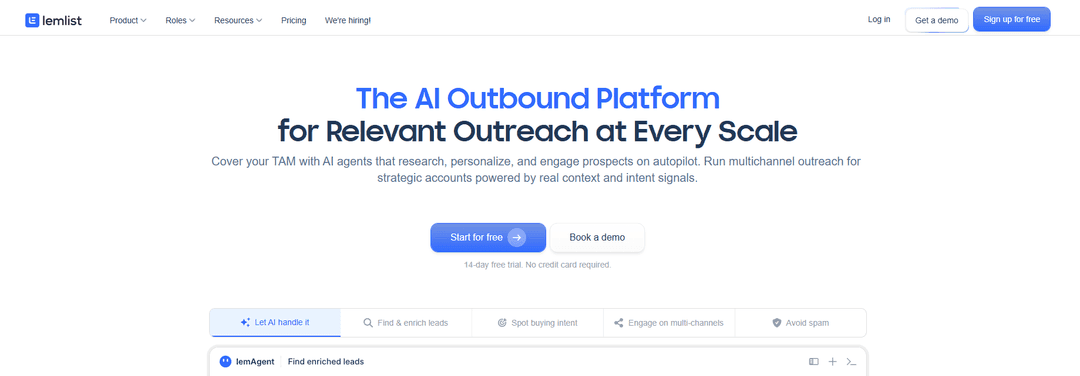
The email plan costs 69 dollars a month for the whole workspace. Multichannel moves to 109 dollars per user, which changes the arithmetic for a team of three. We've put it head to head in Smartlead vs Lemlist.
For one person running a real multichannel sequence, it's the cheapest route on this page. Three people on multichannel costs 327 dollars a month, and at that point the flat-price agents deserve a second look.
Stop guessing who to contact
Gojiberry watches more than 30 buying signals across socials and the web, checks every account against your ICP, and tells you who moved this week.
Get your first leads for freeWhat is Topo?
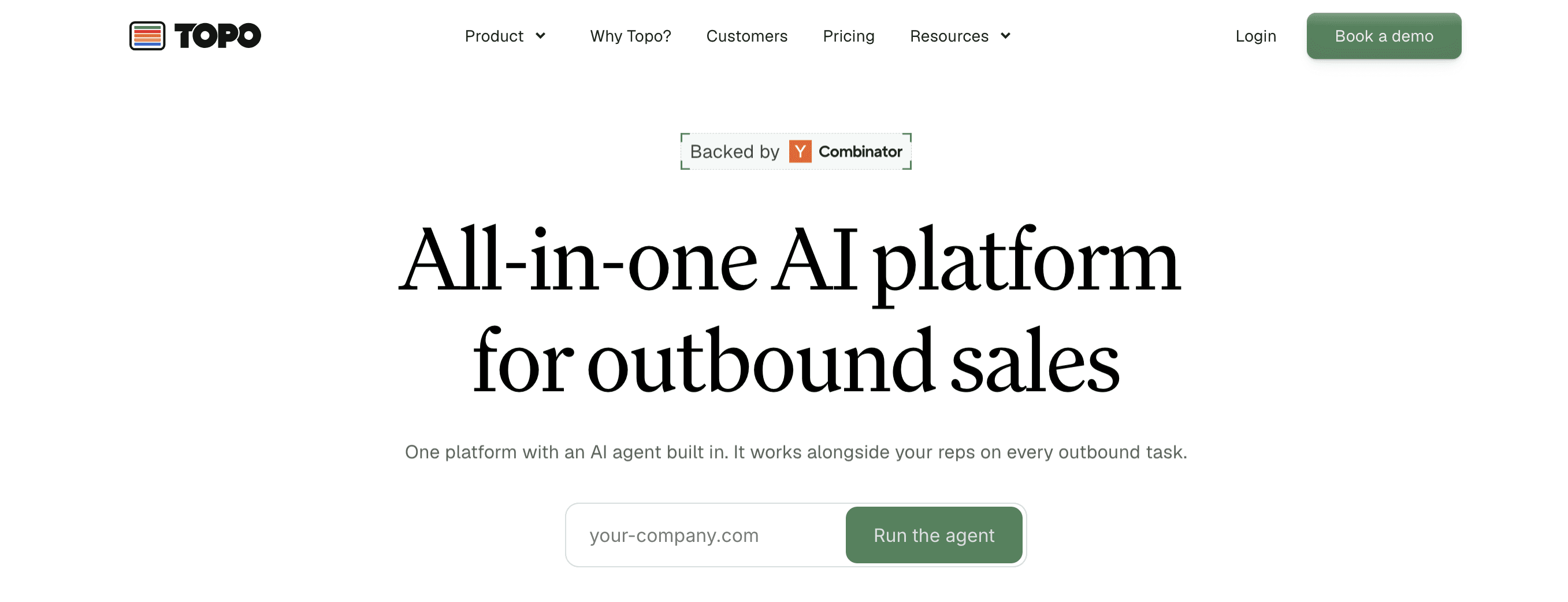
Topo is a French AI sales platform. The company runs out of Paris and Delaware, Y Combinator backs it, and it sells one subscription covering the prospecting platform, an AI outbound agent and a human support layer. More than 200 teams run the agent next to their reps, and Topo doesn't sell the pieces separately.
What can you do with Topo?
A fair amount, and more than several comparison pages suggest. We wrote this section from Topo's own product pages rather than from anyone else's summary of them.
- 🔔Track intent: Topo watches competitors, hiring, funding, CRM activity and website visits across more than 15 sources.
- 🔎Search in plain text: A prompt turns into a lead search, with firmographic filters and research agents layered on top.
- 📤Run sequences: Email, social steps and call tasks run from the platform, on domains and mailboxes Topo manages for you.
- 🧠Keep a human in the loop: Copilot mode surfaces each lead and each draft for a rep to approve before anything ships.
What are the pros and cons of Topo?
What Topo does well
- 🔍Real buying signals from more than 15 sources, tracked continuously
- 📨Multichannel sequences, managed domains and mailboxes inside the platform
- 🤖Copilot mode lets a rep approve every lead and every message
- 🤝White-glove onboarding, strategy workshops and a shared Slack channel
- 🔄Two-way sync with HubSpot and Salesforce, including exclusions and logs
- 📊4.9 out of 5 on G2, with usability and setup scoring highest
Where it gets tight
- 🔒No price on the pricing page, and no self-serve door
- 💰Every plan starts at three user licenses
- 🧮6,000 credits a year caps the team at roughly 500 enriched leads a month
- 📅Credits renew annually, so a heavy quarter borrows from the next one
- 🔧Reviewers flag a learning curve and some integration friction
- 📌No free trial, so evaluation starts with a scoping call
How much does Topo cost?
Topo's own pricing page shows no number. It describes a single platform plan that includes three user licenses, 6,000 credits a year, two domains and six mailboxes, then asks you to talk to the team. OMR publishes 69 euros per user per month, which is the only public figure we found in August 2026.
Run the math for a team of three. At OMR's figure that lands on 207 euros a month and 2,484 euros a year. The three-license floor means a two-person company pays for a seat nobody logs into, and a fourth hire adds 828 euros a year before that person books a single meeting.
The credits deserve the same arithmetic. Six thousand a year, one per enriched lead, works out at 500 leads a month for the whole team, or about 167 per rep. For comparison, Gojiberry charges 99 dollars a month for everyone who sells, and our customer stories run on that same plan.
What do Topo users think?
G2 rates Topo 4.9 out of 5 across 121 reviews, checked in August 2026. Reviewers there praise ease of use, speed to first value and the support, and the recurring complaints cluster on a learning curve and some integration friction. OMR lists Topo with zero reviews, so a buyer comparing across sites finds one glowing source and silence next to it. Topo's own site claims 150 customers and the same 4.9 average.
Why do people look for a Topo io alternative?
Topo detects buying signals and it executes campaigns, so the reasons below have nothing to do with a missing feature. They're about what the model costs a small team and what a buyer can check before signing.
The price follows headcount, not results
At 69 euros per user per month, growing from three sellers to five adds 1,656 euros a year to the bill before anyone books a meeting. The plan bundles three licenses, so the floor stays at three whether you're filling them or not.
The credits run on a yearly clock
Every plan ships 6,000 credits a year, one per enriched lead. That caps the whole team near 500 new names a month. Execution isn't the ceiling here, since Topo handles replies, warmup and multichannel sending. The ceiling is how many fresh accounts the year allows.
The feedback comes from one place
G2 shows 4.9 out of 5 across 121 reviews and OMR shows none. A near-perfect score on a single site, no published price and no free trial doesn't leave a buyer much to weigh before the call.
Personalization thins out as volume climbs
Google has held bulk senders to a 0.3 percent spam complaint rate since February 2024, and HubSpot puts B2B data decay at 2.1 percent a month. Push more volume through a list that ages while you work it and both numbers move against you. That one's on every agent here, ours included.
Which Topo alternative is right for you?
One bottleneck, one recommendation. Find yours and skip the rest.
You're 2 to 10 people and you want one price for the team
Gojiberry. Ninety-nine dollars a month covers everyone who sells, the signals decide who gets a message this week, and a fourth hire won't change the invoice.
You want an agent that handles calls too
11x.ai. Julian is one of the few phone agents shipping in this category. Budget for the annual term before you've fallen for the demo.
You want to launch fast without building a stack
AiSDR or Artisan. Both provision the sending infrastructure and neither one needs a call before you start. Artisan meters credits, AiSDR meters contacts. Gojiberry starts self-serve too, at a sixth of what Artisan's Employee plan costs.
The trigger matters more than the volume
Coldreach. You write the buying signal yourself and it researches every company before it drafts. You'll start at 899 dollars a month. Gojiberry runs the same play on a fixed signal set for 99, so budget decides between the two.
You already send at volume and want full execution
Salesforge. Agent Frank plus the warmup stack handles more sending per dollar than anything else here, once you've fed him a list. Plenty of teams pair him with Gojiberry, which supplies the accounts worth writing to.
You want to build your own lists
Clay. Nothing here gives an operator more room. Hand it to someone who enjoys the work, because a table nobody owns won't survive the quarter.
You mostly run short of contacts
Apollo. Forty-nine dollars per user buys the database and the sequencer, and the free plan tells you fast whether the data covers your market. If it doesn't, you've lost nothing.
FAQ
What is the cheapest Topo alternative?
Lemlist, at 69 dollars a month for the whole workspace on the email plan. Apollo comes next at 49 dollars per user per month, which beats Lemlist for one person and loses to it at three. Among the tools that find the accounts for you rather than waiting for a list, Gojiberry is the cheapest at 99 dollars a month flat, and Clay sits at 167 if you'd rather assemble the workflow yourself.
How much does Topo cost?
OMR publishes 69 euros per user per month. Topo's own pricing page shows no figure and routes you to a scoping call, so treat OMR's number as the best public estimate rather than a quote. What Topo does publish: every plan includes three user licenses, 6,000 credits a year, two domains and six mailboxes. At OMR's rate a team of three pays 207 euros a month, or 2,484 euros a year.
Which Topo alternative works best for a team of 2 to 10?
Gojiberry, and we'll show our reasoning rather than assert it. A team that size rarely has someone owning tooling, so per-seat pricing and annual contracts hurt twice: once on the invoice, once on the ramp. Gojiberry charges one flat price, starts without a call, and hands over accounts that moved this week. If sending volume is your actual constraint instead of targeting, Salesforge costs less per message and does that job better.
Does any Topo alternative handle replies?
Most of them do. Artisan, 11x, AiSDR, Coldreach, Salesforge and Regie all manage replies up to a booked meeting, with an approval mode on several. Apollo, Clay, ZoomInfo and Lemlist expect a human in the thread, though Lemlist and Apollo at least keep the inbox where you're already working. Topo handles replies too, which is worth saying out loud since a few comparison pages claim otherwise.
Is Topo a European tool?
Yes. Topo runs as a French company, Topo SAS, with a US entity in Delaware and offices in Paris and San Francisco. It positions itself as the European answer to ZoomInfo, Clay and Apollo. Lemlist is the other European name in this comparison, and Amplemarket keeps a strong European footprint. We're French too, which matters when procurement asks where the data sits.
How do I switch from Topo without losing my campaigns?
Export three things before your renewal date: your account and contact lists, your sequence copy, and the exclusion list that keeps you off customers and open opportunities. Topo syncs activity back to HubSpot and Salesforce, so your CRM already holds most of the history. Then warm the new domains for two weeks before you send anything at volume, because a fresh domain you push hard lands in spam and you'll spend months digging out.
Can I run Gojiberry next to Topo?
Yes, and a few teams do it deliberately during a renewal window. Gojiberry surfaces the accounts showing buying signals and starts the conversation; Topo keeps running whatever sequences you've already built. Point them at different segments so the same person doesn't get two messages in a week, and compare the reply rates after 30 days. That comparison usually settles the renewal question on its own.
Your buyers are moving now
Someone in your market just changed jobs or started following a competitor. Gojiberry spots it, checks they match your ICP, and writes before anyone else does.
Catch them this weekGojiberry vs Topo: which one brings you leads?
Both products start from buying signals, so a feature-by-feature reading won't settle it. The split shows up in how each one bills.
Here's the line that decides it. Topo bills every seat and Gojiberry bills the team. At one rep the gap barely registers. At three it turns real, and at five it pays for a contractor. That's the whole argument, and we'd rather make it once than dress it up.
What the flat price buys in practice shows up in the numbers our customers report:
Mindflow
Reply rates climbed 31 percent after the team moved to intent-based outbound.
Read the case studyGTE Localize
The team booked 100+ meetings by swapping email blasts for intent-led outreach.
Read the case studyBaur Software
Baur doubled its network by scaling outreach that still reads as human.
Read the case studyWhy we built Gojiberry
Before Gojiberry, Roman spent his days prospecting on socials for Coco.ai. He hunted signals one tab at a time: who changed jobs, who started following a competitor, who posted about a problem we solved. The method worked. It also capped out at roughly thirty accounts, because that's how many one person can follow properly before the tabs start lying to them.
The timing part turned out to matter more than the volume part. US workers hold a job for a median of 3.9 years, and 22 percent of them started their current role inside the last twelve months. Every one of those moves is a reason to reach out, and no human catches them by hand. So we built the routine into a product, and we priced it for the team Roman was on: two to ten people, all of them selling.
That's also why the plan has no seat count. A tool that punishes you for hiring a second rep has picked the wrong customer, and we picked ours on purpose.
Let Gojiberry find them
Tell Gojiberry who you sell to and it starts finding companies showing buying signals. One price for the team, no seat to add, no annual contract.
Start for freeSee the case studies
Your next 10 customers are already out there.
Let your agent find them.
Free Trial · Live in 5 minutes · Cancel anytime